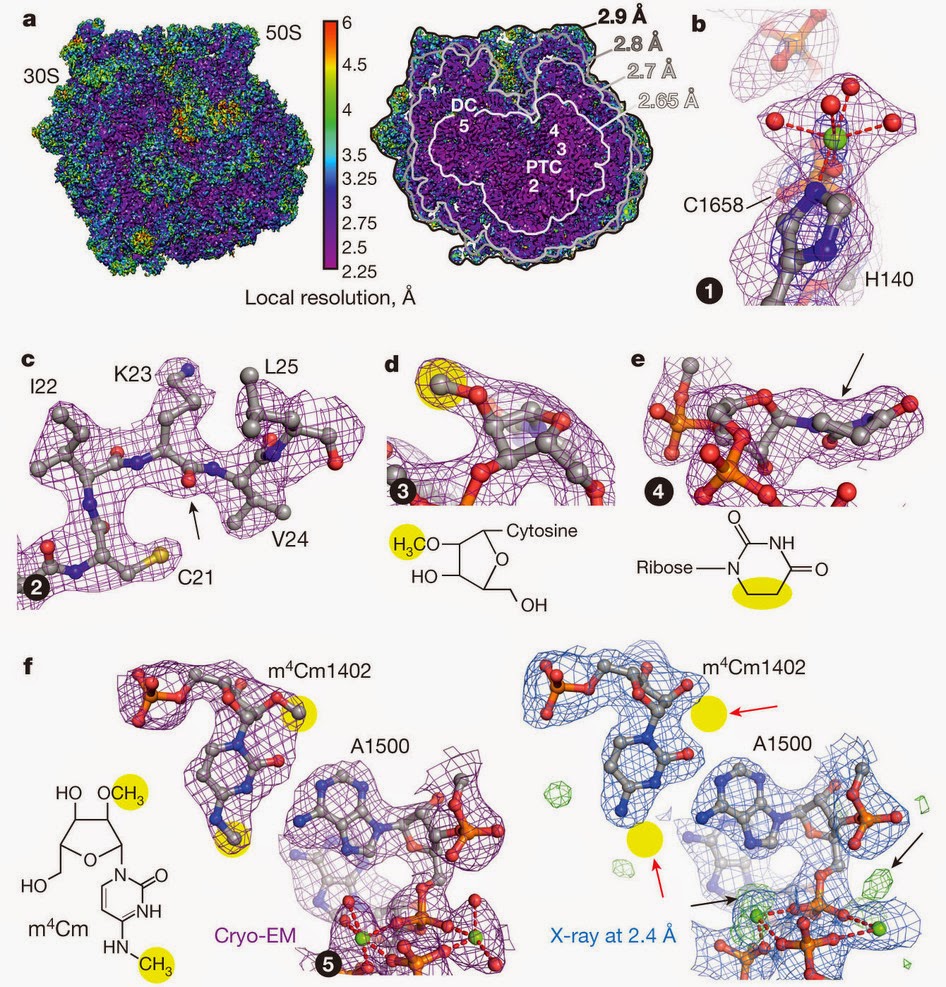
もともと大してブログを書いていなかった上に、長いブランクができてしまった。書きたい話題が無かったわけではなく、文章を書く習慣がついていないので、きっかけがないと何も書かないで時が過ぎてしまう。今回はちょっときっかけがあったのでbioRxivとプレプリントについて書いてみたい。
Science誌は毎年その年の科学のブレークスルーを選ぶ事を恒例にしている。2017年のブレークスルーとして選ばれたのは中性子星の衝突を様々な方法で観測した事だったけれど、次点として選ばれた九つの話題の中に生物学関係分野でのプレプリントサーバーの利用が入っていた。Science誌の選ぶブレークスルーについては西川伸一さんが取り上げていて、山形方人さんがプレプリントサーバーについてコメントしたのに便乗して自分もいくつかコメントをした。その後、山形方人さんも御自身のブログでプレプリントサーバーについて書いている。プレプリントやオープンアクセスについては自分でも色々と考えていたので、ちょっとまとめて書いておこうと思った。(だらだらと書いていたら、長くなってしまったし、思い立ってから何週間もかかってしまったけれど。)
まずは関連する用語をいくつか挙げて置きたい。科学論文は学術雑誌に掲載されるのが普通だけれど、それ以前に論文の原稿を他の研究者と共有したり、広く公開したりする事がある。そういう論文の原稿をプレプリントという。昔はプレプリントはメールなどによって限られた研究者が共有していた。今ではプレプリント専用のサーバー(プレプリントサーバーまたはプレプリントリポジトリなどと呼ぶ)があり、それを利用する事でプレプリントを公開する事ができる。1991年に物理学者のポール・ギンスパーグがプレプリントをまとめて公開するためのサーバーを設立したのがプレプリントサーバーの始まりで、これはその後arXivと呼ばれる物になった。物理学だけではなく、数学、計算機科学などの分野でもプレプリントをarXivで公開する事が普通になっている。プレプリントサーバー上で公開されたプレプリントは誰でも無料で見る事ができる。学術論文が誰でも無料で閲覧できる状態になっている事をオープンアクセスと言い、プレプリントサーバー上のプレプリントは必然的にオープンアクセスになっている。生物学関連の分野では長い間プレプリントサーバーの利用は盛んでは無かった。2013年にコールド・スプリング・ハーバー研究所がbiorXivという生物学関連の分野のためのプレプリントサーバーを設立し、それ以来bioRxivで公開されるプレプリントは増えてきている。
学術雑誌のメリットとプレプリントのメリット
プレプリントを公開するメリットを考えるために、そもそも論文を学術雑誌に発表する意義を最初に考えてみよう。論文を発表する事で研究成果を研究者コミュニティーおよび社会一般に知らせる事ができる。その上で大切なのは、多くの人が研究成果を目にする機会がある事、出来るだけ早く公開される事、公開された事が記録に残る事、などだろう。さらに、論文が学術雑誌に掲載されるためには査読されて受理される事が必要なので、学術雑誌に掲載される事で論文の質についてある種のお墨付きが得られたと見なされる。とりわけ、権威があって受理される事が難しい学術雑誌に論文が掲載されると重要視されやすい。(ただし、下で議論するように、こういうお墨付きが正しいとは限らない。)論文として発表された研究成果は研究者コミュニティーや社会に共有され、科学や技術の進歩につながる。一方、論文は研究者の業績として数えられ、研究者の評価に使われ、人事や研究費の分配を決定するための判断の材料になる。
時代が変わると事情も変わってくる。昔は論文が掲載された学術雑誌が紙に印刷されて出回るのが研究成果を公表するための最も効果的な方法だった。学術雑誌のページ数は限られているので査読をして掲載する論文を絞る事は必要だった。でも電子ファイルをオンラインで公開する事が可能になると、ページ数は絶対的な制限ではなくなる。検索して論文を探す事も難しくない。既存の学術雑誌には次のような問題点もある。査読には時間がかかるので、研究結果が公開される事が遅れてしまう。学術雑誌に掲載される事で論文が多くの人の目に止まるというメリットはある物の、購読料を払わないと論文が読めないという問題もある。学術雑誌の購読料が大学などの図書館の予算を圧迫する事は問題になっていて、大手出版社であるElsevierに対するボイコットも起きている。以上のように、研究結果を早く、広く公開するためには、むしろ学術雑誌が障壁になっている面もある。研究費の多くは税金によっているのに、納税者が商業出版社にお金を払わないと研究の成果を共有できないのは好ましい事ではない。最近は誰でも無料で読めるオープンアクセスの学術雑誌が発行されるようになってきたけれど、査読による審査が行われ、著者が出版料を支払うシステムの物が多い。
プレプリントサーバーを利用してプレプリントを公開する事のメリットしては、査読を待たずに研究結果を共有できる事にある。誰でも無料で研究の結果にアクセスする事ができるのもメリットだ。つまり、より早く、より広く、情報交換ができる可能性がある。
ただし、プレプリントサーバーの利用が普通になった物理学や数学においても学術雑誌が役割を失ったわけではなく、arXivにプレプリントとして公開された論文が後に学術雑誌に掲載される事が多い。bioRxivがスタートした当初は、bioRxivで公開されたプレプリントを生物学系の学術雑誌が受け入れるかどうかに不安の声もあったけれど、現在では受け入れる学術雑誌が多い。
生物学、医学関係者のプレプリントサーバーに対する抵抗
正直な所、bioRxivが始まった時、その将来については少し懐疑的だった。生物学の分野のプレプリントサーバーを設立するというアイデアはbioRxivが最初ではない。1999年にNIHの所長だったハロルド・ヴァーマスがプレプリントサーバーと論文のアーカイブを含むE-Biomedという計画を提案した事がある。
ところがその計画は、出版社の反対や、査読されていないプレプリントを公開する事に不安を持つ生物学や医学の分野の研究者の抵抗にあって頓挫してしまった。研究者にはプレプリントとして発表した結果をスクープされる事の不安もあったのかもしれない。(原則としては、プレプリントとして先に発表する事で先取権を主張出来るはずなのだけれど。)その後ヴァーマスはPLoS (Public Library of Science)という査読付きのオープンアクセスの学術雑誌出版社を設立する事になった。その経過を見ていて、生物学や医学の研究者は査読付きの学術雑誌に論文を発表する事にこだわりがあるのだなという感想を持っていた。
2013年の末にbioRxivが始まった時には大きなニュースにならなかった。NIHが旗を振った計画がスタート以前でつまづいたのに、細々と始まったbioRxivを利用する人がどれだけいるのか疑問だった。Drug Monkeyという生物学系の研究者のブロガーは同じ2013年にプレプリントに否定的なブログを書いている。生物学系の研究者のプレプリントに対する認識はそんな感じが多いという印象があった。
bioRxivの現状
上の図はprepubmed.orgからで、月ごとの医学生物学関係のプレプリントの数の推移を示している。医学生物学関係のプレプリントを発表する場がいくつかある内、bioRxivの割合は緑色に示されている。2013年の末にbioRxivが始まってからbioRxivで公開されるプレプリントは増え続けていて、今では医学生物学関係のプレプリントの大半を占めている。Science誌によると毎月1500ほどの医学生物学関係のプレプリントというのは毎月pubmedに加わる新しい論文が10万ほどなのに比べるとまだ1.5%程に過ぎないけれど、かなり定着してきた。実際にbioRxivのプレプリントを読んだ感想として、面白い研究や、有力研究者によるプレプリントが増えていて、新しい風が吹いていると感じられる。
E-Biomedが頓挫した時との違いは何だろうか。PLoS以降、Elifeなどオープンアクセスの学術雑誌が増えて、オープンアクセスについての議論が盛んにされるようになった。そのおかげでプレプリントの意義が認識されるようになったのかもしれない。今の所bioRxivに投稿されているプレプリントにはバイオインフォマティックスやゲノム関連の物が多い。こういう分野の研究者には計算機科学、数学、物理学、統計学などの分野に馴染みのある人が多い。そういう分野ではarXivにプレプリントを公開することは普通なので、その文化が生物学系に導入されている面もあると思う。NIHが強制するのではなく、民間機関であるコールド・スプリング・ハーバー研究所が始めた事で、自主的に利用したい人達だけが利用して自然に発展した事も結果的には良かったのかもしれない。一方、最近では研究費を出す側がbioRxivにプレプリントを公開する事を方針にしている場合もある。面白いプレプリントがあると、ツイッターなどで話題にする研究者もいるので、ソーシャルメディアがプレプリントの宣伝になっている面もある。bioRxivが始まって時間が経ち、bioRxivに発表された研究が学術雑誌に論文として発表される事の実績もできた。プレプリントの公開が学術雑誌の論文採用の妨げにならないとわかって、プレプリント公開に対する抵抗も少なくなってきたと思う。
論文の評価はどういう風に決まるべきなのか−出版後査読の重要性
査読をされておらず、学術雑誌に受理されていないプレプリントについて考える事は、そもそも論文の評価がどういう風に決まるべきなのかを考えるきっかけにもなる。査読されていないプレプリントなんて信用できないと思う人もいるようだ。でも査読はせいぜい数人の査読者が行い、編集者の裁量で決まってしまうので、正しいという保証はない。どんな論文でも批判的に内容を吟味するべきで、プレプリントが特別な訳ではない。
内容に価値があれば学術雑誌に掲載される事が必要でない事の例にはポアンカレ予想の証明がある。ポアンカレ予想の証明をしたグリゴリー・ペレルマンはプレプリントをarXiv上で公開しただけで、学術雑誌に投稿することは無かった。つまり形式上は「査読」はされていない。でも重要な証明だったので他の専門家が検証をし、ペレルマンの証明が正しかったという理解が得られている。また、他の数学者による詳しい証明の論文は学術雑誌に掲載されたけれど、ペレルマンの先取権が疑われてはいない。ペレルマンの論文のようにプレプリントのみで学術雑誌に論文が発表されないのは普通のケースではないけれど、プレプリントの段階で評判になる論文は珍しくない。査読を経て学術雑誌に論文が発表される事は論文の評価の必要条件ではない。
NatureやScienceに掲載された論文でも間違っていた物はいくつもあるし、重要な論文が不採用になる事もある。査読に問題がある場合もあれば、再現性に問題がある事が後になってわかる事もある。論文が発表された段階では正しい評価ができない場合もある。科学の進歩は生物の進化に似ている部分がある。色々な発見が報告され、理論が提唱される中で、間違っていた物は淘汰され、正しい物が生き残る。淘汰は論文が発表されてから時間をかけて起きる。論文の真の価値は学術雑誌に掲載された時に決まるのではなく、本当の評価が下されるのは、たくさんの研究者の目に触れて、内容が検証されてからだ。学術雑誌に発表される前の査読(pre-publication peer review)に対して、論文発表後の評価を出版後査読(post-publication peer review)と言う。
それでは具体的には出版後査読はどうなされるのだろうか。基本的には、論文を読んで検証をした研究者が意見を交換し、研究者コミュニティーのコンセンサスが得られるのだろう。山形方人さんが書かれているように、検証には論文の論理の検証と実験結果の再現性の検証の両方が含まれる。
問題は意見の交換がどこでなされるのかだ。形式ばった方法としては、論文への批判を同じ学術雑誌、あるいは別の学術雑誌に投稿する事ができる。ただ、そういう批判が掲載されるとは限らないし、掲載されるまでには時間がかかる。新たな研究結果が論文として発表されることで、それ以前の論文の結果が支持されたり否定されたりする事がある。この場合はデータもあるのでもっとも説得力があるが、時間も労力もかかる。もっと私的に、研究仲間との会話で意見を交わす事は普通にあるだろう。でもそういう意見が広く伝わるのは難しい。最近ではインターネットを使って意見を発信や共有する事も盛んになった。例えば、ブログやツイッターを使って論文にコメントをつける研究者がいる。さらにPubPeerという出版後査読を目的としたサイトで論文にコメントをつける事もできる。ただ、こういう非公式な形のコメントを拒否する人もいるし、多くの人が目にするとは限らない。PubMed CommonsというPubMedに論文に対するコメントをつけるシステムもできたけれど、コメントがつけられる事は少なかったし、もうすぐ中止されるそうだ。論文への批判が学術雑誌に掲載されるのは難しいので、批判その物をプレプリントとして公開する人もいる。
残念ながら、誰もが納得するような出版後査読の場は今の所は存在しない。それでも、以前はこのプロセスは不透明な部分が多かったので、インターネットによってオープンな部分が増えたのは悪いことではないと思う。
ブログなどのインターネット上での出版後査読は、ヒ素DNA論文のような面白いケースもあったし、最近は心理学の分野でいろいろ論争になっている。長くなってしまったので、できればまた別に書いてみたい。
結び
プレプリントについて話を戻すと、基本的には公開したい人が公開して、読みたい人が読めばいいと思う。すでに面白いプレプリントを読んだ経験があるので、個人的には読む事にメリットがあると思うし、自分でもプレプリントを公開していきたいと思う。そうする事で情報交換がもっと速くなる事を期待している。だからと言ってプレプリントサーバーを利用したくない人に強制するつもりはない。プレプリントは道具であって、それを使うかどうかは個人の自由だ。
プレプリントに興味がない人がいても全然構わないし、生物学系の研究者ではまだ知らない人も多かもしれない。でもプレプリントに対する無関心や警戒には、論文の評価は査読(および、その結果どの学術雑誌に論文が掲載されるか)で決まるという考えに根差している部分がありそうだ。実際、研究業績がそのようにして評価されがちな現状がある。そういう見方をすると、プレプリントを公開してもキャリアのためにはならないし、プレプリントとして公開された研究成果が学術雑誌に受け入れられないかもしれないという不安もあったし、メリットはないように見えてしまうかもしれない。
問題は、そういう研究業績の評価のし方が必ずしも科学のためにはなっていない事だ。できるだけ格の高い学術雑誌に論文を発表する事のインセンティブが強いので、早く、華々しい結果を出す事が求められ、再現性や厳密性が二の次になる危険性がある。生物学系の場合、とりわけNature、Science、Cellに論文を発表する事のインセンティブは強く、Randy Schekmanはその事が科学に悪影響を与えていると指摘している。ツイッターでも科学は巧いウソをつく競争になっているという日本語の議論があった。Bodo SternとErin O’SheaはScientific Publishing in the Digital Ageという文章で、研究発表とインセンティブの仕組みの変革を提唱していて、プレプリントや出版後査読についても論じている。今後、研究の発表や評価のあり方が科学のためになるように改善される事を期待したい。
プレプリントに関する記事のリンク集
生命科学分野は「プレプリント」を導入すべき? https://www.enago.jp/academy/preprint/
プレプリントを論文の「最終版」に!? https://www.enago.jp/academy/preprint_201703/
プレプリントが研究の普及に果たす役割 https://www.editage.jp/insights/the-role-of-preprints-in-research-dissemination
バイオ系プレプリントサーバを利用してみた(その1) http://wagamamakagakusha.hatenablog.com/entry/2105056_1
バイオ系プレプリントサーバを利用してみた(その2) http://wagamamakagakusha.hatenablog.com/entry/2105062
ASAPbio Preprint info center http://asapbio.org/preprint-info
ASAPbio Scientific Publishing in the Digital Age http://asapbio.org/digital-age
Peer review, preprints and the speed of science https://www.theguardian.com/science/occams-corner/2015/sep/07/peer-review-preprints-speed-science-journals
Monday, February 5, 2018
Tuesday, September 27, 2016
Guessing the Nobel Prize winners for 2016
It was not my intention to only write about the Nobel Prize, but I haven't written anything since writing about the Nobel Prize last year. It is the time of the year when the Nobel Prize winners are announced again. I will write my guesses for this year. I was able to guess a win for neutrino oscillations last time. The only major addition for this year is the detection of gravitational waves for the Physics Prize. Keep in mind that the importance of a scientific work does not depend on winning a Nobel Prize. What I'm doing here is a mixture of guessing what the Nobel Committee thinks and expressing what kind of work I want to be recognized.
Physiology or Medicine
Optogenetics: Gero Miesenböck, Georg Nagel, and Karl Deisseroth
I'm not a neuroscientist, but I can see why optogenetics may be considered for a Nobel Prize. How the brain functions is a fascinating scientific question and is important for understanding mental illnesses. Optogenetics allows researchers to manipulate neurons by light. It has been used to study which neurons are involved in what kind of processes. That seems pretty cool to me.
Protein chaperones: Arthur Horwich and F. Ulrich Hartl
This is probably a solid pick that has a good chance. It is an important topic in molecular biology. These two scientists have been receiving major awards in a way that is similar to many previous Nobel Prize winners, including the Lasker Award in 2011. They could be considered for the Chemistry Prize, instead.
Transcription machinery in eukaryotes and nuclear hormone receptors: Robert Roeder, Pierre Chambon, and Ronald Evans
Many people seem to be thinking that Evans and Chambon are likely to win the Nobel Prize for the discovery of nuclear hormone receptors. While I don't disagree with the importance of nuclear hormone receptors, I think it is a little weird if Evans and Chambon win while Roeder's more general work on eukaryotic transcription is not recognized. Roeder may have lost his chance when Roger Kornberg was the sole winner of the Chemistry Prize in 2006 for his work on RNA polymerase, but Kornberg won the Chemistry Prize in large part because he solved the structure. There might be a path for the Physiology/Medicine Prize for more biological works of Roeder, Chambon, and Evans together. Both Roeder and Chambon discovered that there are multiple RNA polymerases in eukaryotes. Roeder made many important contributions in the field since then. Evans and Chambon discovered nuclear hormone receptors, which are transcription factors whose activities are dependent on hormones.
Paleogenetics: Svante Pääbo
I'm not sure if this is the kind of topic that the Nobel Prize will recognize, but I think this is a very exciting field.
CRISPR: It's difficult to pick the winners.
Feng Zhang and George Church?
Feng Zhang, George Church, and Jennifer Doudna?
Emmanuelle Charpentier, Jennifer Doudna, and Feng Zhang?
Emmanuelle Charpentier and Jennifer Doudna?
Emmanuelle Charpentier, Jennifer Doudna, and Virginijus Siksnys?
I don't know any other recent technique that has had as huge an impact in biomedical sciences as CRISPR has. Optogenetics is cool, but it is a method used in a more specialized field. CRISPR is used in a wide range of fields. In that regard, CRISPR is an obvious choice for a Nobel Prize. The only problem is that it is not easy to choose the recipients.
The biggest impact of CRISPR on research has been for genome editing. The use of CRISPR for genome editing was first demonstrated by the laboratories of Feng Zhang and George Church. (One may also include a paper published by Jennifer Doudna's laboratory shortly after them.) There is no question that their papers were excellent and highly influential. But one can argue that someone else with experience in zinc-finger nucleases or TALENs would have accomplished this sooner or later if they had not.
The genome editing technique is dependent on the enzymatic activity of Cas9, which was demonstrated in one paper by Jennifer Doudna and Emmanuelle Charpentier's laboratories, and in another paper by Virginijus Siksnys' laboratory. But one can argue that even their findings could be anticipated from earlier studies that had shown that CRISPR targets DNA.
If you want to credit the discovery of CRISPR as an adaptive immune system, that was demonstrated by Rodolphe Barrangou, Philippe Horvath and others. But even that was anticipated by bioinformatic analyses and predictions made in one paper by Alexander Bolotin and the colleagues, and in another paper by Eugene Koonin and the colleagues. The pioneering studies by Francisco Mojica and others were indispensable, even though they were not the ones who ended up solving the puzzle and therefore are unlikely to receive the Nobel Prize.
Researchers who have received various major awards for CRISPR-related work include Rodolphe Barrangou, Emmanuelle Charpentier, Jennifer Doudna, Philippe Horvath, Virginijus Siksnys, and Feng Zhang. Oddly, George Church has not received an award for this, as far as I know. Church runs a huge lab and it's possible the his personal contribution was not big. Still, it's weird that no one from his group was given a credit while Zhang was.
Scientific progress depends on contributions by many people. CRISPR is a great example. We wouldn't be talking about CRISPR now without the people who were studying those odd sequences in bacteria when it was not fashionable to do so. But they are not likely to win the Nobel Prize. Whoever is chosen as the recipient for the CRISPR work, there will be some controversy. Someone could be disappointed because she or he was not chosen as the recipient in spite of doing an important work. A situation like this makes me uncomfortable about the Nobel Prize. I concede that, by trying to guess the winners, I am guilty of treating the Nobel Prize like it is a big deal.
Other possible topics:
Unfolded protein response (Peter Walter and Kazutoshi Mori)
Autophagy (Yoshinori Ohsumi)
Molecular motors (Michael Sheetz, James Spudich, and Ronald Vale) — It's too bad that Hugh Huxley didn't win.
Micro RNA (Victor Ambros and Gary Ruvkun)
Sensing of heat and pain (David Julius)
Hearing (James Hudspeth and David Corey)
Circadian rhythm (Jeffrey Hall, Michael Rosbash, and Michel Young) — It's too bad that Seymour Benzer didn't win.
It's always possible that the Physiology/Medicine Prize will go to something more clinical (2015) or brain-related (2014) that I'm not familiar with.
Chemistry
Cryo-electron microscopy: Richard Henderson, Joachim Frank, and Sjors Scheres
Physics
Detection of gravitational waves: Rainer Weiss, Kip Thorne, and Ronald Drever
This is probably as close to a shoo-in to win the Physics Prize as possible. There is no question about the importance of the discovery. It has received a huge publicity. There are three consensus choice for the recipients. I can't think of a reason why this will not win a Nobel Prize. The only question is whether it is going to be this year. The announcement of the detection was made on February 11th of this year. Was there enough time for nomination to be considered for this year's prize? Perhaps it does not matter because the committee should be aware of the news. But only two events have been reported so far. It won't surprise me if the committee wants to wait a little longer for more validation. But it's quite possible that they will award the Physics Prize for gravitational waves this year.
Like many important discoveries in physics, this was done by a huge collaboration that involves more than a thousand people. I think that the rule of only recognizing up to three representatives is unfair and outdated. But this is not something that the Nobel Committee is going to change this year.
Physiology or Medicine
Optogenetics: Gero Miesenböck, Georg Nagel, and Karl Deisseroth
I'm not a neuroscientist, but I can see why optogenetics may be considered for a Nobel Prize. How the brain functions is a fascinating scientific question and is important for understanding mental illnesses. Optogenetics allows researchers to manipulate neurons by light. It has been used to study which neurons are involved in what kind of processes. That seems pretty cool to me.
Protein chaperones: Arthur Horwich and F. Ulrich Hartl
This is probably a solid pick that has a good chance. It is an important topic in molecular biology. These two scientists have been receiving major awards in a way that is similar to many previous Nobel Prize winners, including the Lasker Award in 2011. They could be considered for the Chemistry Prize, instead.
Transcription machinery in eukaryotes and nuclear hormone receptors: Robert Roeder, Pierre Chambon, and Ronald Evans
Many people seem to be thinking that Evans and Chambon are likely to win the Nobel Prize for the discovery of nuclear hormone receptors. While I don't disagree with the importance of nuclear hormone receptors, I think it is a little weird if Evans and Chambon win while Roeder's more general work on eukaryotic transcription is not recognized. Roeder may have lost his chance when Roger Kornberg was the sole winner of the Chemistry Prize in 2006 for his work on RNA polymerase, but Kornberg won the Chemistry Prize in large part because he solved the structure. There might be a path for the Physiology/Medicine Prize for more biological works of Roeder, Chambon, and Evans together. Both Roeder and Chambon discovered that there are multiple RNA polymerases in eukaryotes. Roeder made many important contributions in the field since then. Evans and Chambon discovered nuclear hormone receptors, which are transcription factors whose activities are dependent on hormones.
Paleogenetics: Svante Pääbo
I'm not sure if this is the kind of topic that the Nobel Prize will recognize, but I think this is a very exciting field.
Feng Zhang and George Church?
Feng Zhang, George Church, and Jennifer Doudna?
Emmanuelle Charpentier, Jennifer Doudna, and Feng Zhang?
Emmanuelle Charpentier and Jennifer Doudna?
Emmanuelle Charpentier, Jennifer Doudna, and Virginijus Siksnys?
I don't know any other recent technique that has had as huge an impact in biomedical sciences as CRISPR has. Optogenetics is cool, but it is a method used in a more specialized field. CRISPR is used in a wide range of fields. In that regard, CRISPR is an obvious choice for a Nobel Prize. The only problem is that it is not easy to choose the recipients.
The biggest impact of CRISPR on research has been for genome editing. The use of CRISPR for genome editing was first demonstrated by the laboratories of Feng Zhang and George Church. (One may also include a paper published by Jennifer Doudna's laboratory shortly after them.) There is no question that their papers were excellent and highly influential. But one can argue that someone else with experience in zinc-finger nucleases or TALENs would have accomplished this sooner or later if they had not.
The genome editing technique is dependent on the enzymatic activity of Cas9, which was demonstrated in one paper by Jennifer Doudna and Emmanuelle Charpentier's laboratories, and in another paper by Virginijus Siksnys' laboratory. But one can argue that even their findings could be anticipated from earlier studies that had shown that CRISPR targets DNA.
If you want to credit the discovery of CRISPR as an adaptive immune system, that was demonstrated by Rodolphe Barrangou, Philippe Horvath and others. But even that was anticipated by bioinformatic analyses and predictions made in one paper by Alexander Bolotin and the colleagues, and in another paper by Eugene Koonin and the colleagues. The pioneering studies by Francisco Mojica and others were indispensable, even though they were not the ones who ended up solving the puzzle and therefore are unlikely to receive the Nobel Prize.
Researchers who have received various major awards for CRISPR-related work include Rodolphe Barrangou, Emmanuelle Charpentier, Jennifer Doudna, Philippe Horvath, Virginijus Siksnys, and Feng Zhang. Oddly, George Church has not received an award for this, as far as I know. Church runs a huge lab and it's possible the his personal contribution was not big. Still, it's weird that no one from his group was given a credit while Zhang was.
Scientific progress depends on contributions by many people. CRISPR is a great example. We wouldn't be talking about CRISPR now without the people who were studying those odd sequences in bacteria when it was not fashionable to do so. But they are not likely to win the Nobel Prize. Whoever is chosen as the recipient for the CRISPR work, there will be some controversy. Someone could be disappointed because she or he was not chosen as the recipient in spite of doing an important work. A situation like this makes me uncomfortable about the Nobel Prize. I concede that, by trying to guess the winners, I am guilty of treating the Nobel Prize like it is a big deal.
Unfolded protein response (Peter Walter and Kazutoshi Mori)
Autophagy (Yoshinori Ohsumi)
Molecular motors (Michael Sheetz, James Spudich, and Ronald Vale) — It's too bad that Hugh Huxley didn't win.
Micro RNA (Victor Ambros and Gary Ruvkun)
Sensing of heat and pain (David Julius)
Hearing (James Hudspeth and David Corey)
Circadian rhythm (Jeffrey Hall, Michael Rosbash, and Michel Young) — It's too bad that Seymour Benzer didn't win.
It's always possible that the Physiology/Medicine Prize will go to something more clinical (2015) or brain-related (2014) that I'm not familiar with.
Chemistry
Cryo-electron microscopy: Richard Henderson, Joachim Frank, and Sjors Scheres
As I have written before, there has been a revolution in cryo-electron microscopy. The resolution has improved and I have seen many important structures solved using this technique. The impact is undeniable.
Chemical biology: Stuart Schreiber
Schreiber's group has done many things. They made important findings related to calcineurin, rapamycin, histone deacetylases, among other things. These are hot topics, but there are other important researchers in each field and Schreiber's group tends to move to new things instead of becoming the specialist. The Nobel Prize is not supposed to be a lifetime achievement award. Is it possible to single out one thing Schreiber's group did that deserves a Nobel Prize? Or is it possible to honor him as a pioneer in chemical biology, which uses chemistry, especially small molecules, to make important biological discoveries? These questions are up for debate. I can easily picture him winning the prize because of the impacts of what he has done, but I won't be surprised if he doesn't.
Histone modifications: David Allis
Histones are proteins that for a long time were considered boring packing materials that make up chromosomes. There were some people, most notably Vincent Allfrey, who thought that chemical modifications of histones are important for regulating gene expression, but there was not a definitive evidence. Things changed in 1996. That year, David Allis' group discovered an enzyme that add acetyl groups to histones (histone acetylase) and Stuart Schreiber's group discovered an enzyme that remove acetyl groups from histones (histone deacetylase). Importantly, the yeast homolog of the histone acetylase was known to activate gene expression and the yeast homolog of the histone deacetylase was known to repress gene expression. That supported the connection between histone modifications and gene expression. Exciting developments followed.
For Schreiber, that was just one of many things his group did. They haven't done much in the field since then. Allis, on the other hand, has followed up on that discovery by doing many important works in the field. There has been some unfortunate overhyping of the field and Allis is probably guilty of doing some of that. Nevertheless, I do think that the field is very exciting and important. This could be a topic for the Physiology/Medicine Prize, but I thought that the discovery of the histone acetylase by Allis' group could be paired with the discovery of the histone deacetylse by Schreiber's group.
Protein chaperones: Arthur Horwich and F. Ulrich Hartl
Many of the candidates for the Physiology/Medicine Prize also have a chance of winning the Chemistry Prize. Protein chaperones are particularly chemical among them.
Histones are proteins that for a long time were considered boring packing materials that make up chromosomes. There were some people, most notably Vincent Allfrey, who thought that chemical modifications of histones are important for regulating gene expression, but there was not a definitive evidence. Things changed in 1996. That year, David Allis' group discovered an enzyme that add acetyl groups to histones (histone acetylase) and Stuart Schreiber's group discovered an enzyme that remove acetyl groups from histones (histone deacetylase). Importantly, the yeast homolog of the histone acetylase was known to activate gene expression and the yeast homolog of the histone deacetylase was known to repress gene expression. That supported the connection between histone modifications and gene expression. Exciting developments followed.
For Schreiber, that was just one of many things his group did. They haven't done much in the field since then. Allis, on the other hand, has followed up on that discovery by doing many important works in the field. There has been some unfortunate overhyping of the field and Allis is probably guilty of doing some of that. Nevertheless, I do think that the field is very exciting and important. This could be a topic for the Physiology/Medicine Prize, but I thought that the discovery of the histone acetylase by Allis' group could be paired with the discovery of the histone deacetylse by Schreiber's group.
Protein chaperones: Arthur Horwich and F. Ulrich Hartl
Many of the candidates for the Physiology/Medicine Prize also have a chance of winning the Chemistry Prize. Protein chaperones are particularly chemical among them.
CRISPR: Emmanuelle Charpentier, Jennifer Doudna, and Virginijus Siksnys
If there is a Chemistry Prize for CRISPR instead of a Physiology/Medicine Prize, these three could be the recipients for showing that Cas9 is an RNA-guided enzyme that cuts DNA.Physics
Detection of gravitational waves: Rainer Weiss, Kip Thorne, and Ronald Drever
This is probably as close to a shoo-in to win the Physics Prize as possible. There is no question about the importance of the discovery. It has received a huge publicity. There are three consensus choice for the recipients. I can't think of a reason why this will not win a Nobel Prize. The only question is whether it is going to be this year. The announcement of the detection was made on February 11th of this year. Was there enough time for nomination to be considered for this year's prize? Perhaps it does not matter because the committee should be aware of the news. But only two events have been reported so far. It won't surprise me if the committee wants to wait a little longer for more validation. But it's quite possible that they will award the Physics Prize for gravitational waves this year.
Like many important discoveries in physics, this was done by a huge collaboration that involves more than a thousand people. I think that the rule of only recognizing up to three representatives is unfair and outdated. But this is not something that the Nobel Committee is going to change this year.
Quantum entanglement/Bell's inequalities: John Clauser, Alain Aspect, Anton Zeilinger, Ronald Hanson, and others
I have been guessing that this will win the Physics Prize for years. This is arguably as important as gravitational waves. However, it may not be quite a shoo-in to win the Nobel Prize like the detection of gravitational waves. It has a long and complicated history involving many people and it may be difficult to narrow down to three winners. The one who has made the most important contribution, John Bell, has died a few decades ago. There were concerns about possible loopholes in the experimental tests of Bell's inequalities. Since last year, loophole-free Bell tests have been reported. This on one hand strengthen the case for a Nobel Prize for this subject, but on the other hand complicates the situation by adding even more names. It is possible that the Nobel Prize will go to other topics related to quantum information such as quantum teleportation, just like the 2012 Prize went to different works related to quantum measurements.
Predictions by other people:
Everyday Scientist
Curious Wavefunction
Predictions by other people:
Everyday Scientist
Curious Wavefunction
Sunday, October 11, 2015
2015 Nobel Prize in Chemistry for DNA repair
2015 Nobel Prize in Chemistry was awarded to Tomas Lindahl, Paul Modrich, and Aziz Sancar for their studies of DNA repair. This was a huge surprise to me. There is no question that DNA repair is important. But it wasn't clear to me who should win the Nobel Prize for DNA repair. This year's Lasker Award also recognized works on DNA repair, but it went instead for Stephen Elledge and Evelyn Witkin. That selection was not obvious to me, either, although I knew that Stephen Elledge had done impressive works and had also received Gairdner Award, Rosenstiel Award, and Dickson Prize. It seemed to me that there are so many aspects to DNA repair pathways and there are many other people who have also contributed to this field. Larry Moran mentions Philip Hanawalt as someone who may have been overlooked. A commentator in In The Pipeline blog mentions Richard Kolodner and Thomas Kunkel as some other important contributors in the field while noting that Paul Modrich often beat Richard Kolodner in tight races.
This is probably a case where there is no perfect answer, but at least there seems to be a logic to the decision by the Nobel committee. The works of these three elucidated details of three DNA repair mechanisms, namely base excision repair, nucleotide excision repair, and mismatch repair. They did this by establishing the enzymatic reactions in the test tubes. So, the nature of their studies fits with the Chemistry Prize. All of these mechanisms deal with DNA damages that occur on one strand of DNA. In comparison, my impression is that someone like Stephen Elledge has worked on cellular responses when the DNA is damaged and the nature of the damages include cuts on two strands of DNA. He has mainly used genetic approaches to understand the signaling cascades and the systematic responses rather than the detailed biochemistry of the repair processes. So, what Elledge did can be considered more genetic and biological and less chemical. And of course by focusing on base excision repair, nucleotide excision repair, and mismatch repair, the Nobel committee was able to keep the number of recipients to three.
Ultimately, the Nobel committee has the right to choose the recipients that they like. We tend to scrutinize the Nobel Prize much more than we do other prizes, but the Nobel Prize is not fundamentally different from other prizes. In the past, the Nobel Prize often went to people who had already been recognized by other major prizes, but it is interesting that they made a little surprising choice this year. And considering the importance of DNA repair, they didn't make a bad choice.
This is probably a case where there is no perfect answer, but at least there seems to be a logic to the decision by the Nobel committee. The works of these three elucidated details of three DNA repair mechanisms, namely base excision repair, nucleotide excision repair, and mismatch repair. They did this by establishing the enzymatic reactions in the test tubes. So, the nature of their studies fits with the Chemistry Prize. All of these mechanisms deal with DNA damages that occur on one strand of DNA. In comparison, my impression is that someone like Stephen Elledge has worked on cellular responses when the DNA is damaged and the nature of the damages include cuts on two strands of DNA. He has mainly used genetic approaches to understand the signaling cascades and the systematic responses rather than the detailed biochemistry of the repair processes. So, what Elledge did can be considered more genetic and biological and less chemical. And of course by focusing on base excision repair, nucleotide excision repair, and mismatch repair, the Nobel committee was able to keep the number of recipients to three.
Ultimately, the Nobel committee has the right to choose the recipients that they like. We tend to scrutinize the Nobel Prize much more than we do other prizes, but the Nobel Prize is not fundamentally different from other prizes. In the past, the Nobel Prize often went to people who had already been recognized by other major prizes, but it is interesting that they made a little surprising choice this year. And considering the importance of DNA repair, they didn't make a bad choice.
2015 Nobel Prize in Physics for neutrino oscillations
The 2015 Nobel Prize in Physics was awarded to Takaaki Kajita and Arthur McDonald for the discovery of neutrino oscillations. The existence of neutrino oscillations means that neutrinos have non-zero masses. This is a piece that does not quite fit to the original Standard Model, which has been otherwise very successful. (At least that is the extent of my knowledge.) It was one of the biggest discoveries in elementary particle physics in the last few decades before the discovery of Higgs boson and it is not a huge surprise that they finally decided to award the Physics Prize for the discovery of neutrino oscillations this year. Takaaki Kajita worked for the Super Kamiokande project in Japan. Arthur McDonald worked for the SNO project in Canada.
It was also a somewhat bittersweet announcement. Yoji Totsuka, who lead the Super Kamiokande project, is no longer alive. He passed away in 2008 at the age of 66. He most likely would have shared the Nobel Prize had he been alive.
In my previous post, I guessed that the discovery of neutrino oscillations could win the Nobel Prize in Physics. I thought this was an unquestionably important discovery. The discovery of exoplanets, predicted to win the Physics Prize by some, may be intriguing and is no doubt a great technical feat, but we already knew that planets exist, at least in our solar system. The discovery of neutrino oscillations was more fundamental and surprising. I also think that the discovery of neutrino oscillations was probably on a more solid foundation than some other contenders. The tests of Bell's inequality are important, but there are arguments of possible loopholes. The existence of dark matter was only inferred from indirect methods and we still don't know what dark matter really is. The only question was how to deal with the death of Totsuka. It seems that the answer was to choose Kajita as one of the recipients.
I'm not sure if only awarding the leaders of these big projects a prize is a good thing. Nevertheless, I'm sure that this is an exciting news for the scientists who worked on the Super Kamiokande project and the SNO project. I would like to congratulate them for the job well done.
It was also a somewhat bittersweet announcement. Yoji Totsuka, who lead the Super Kamiokande project, is no longer alive. He passed away in 2008 at the age of 66. He most likely would have shared the Nobel Prize had he been alive.
In my previous post, I guessed that the discovery of neutrino oscillations could win the Nobel Prize in Physics. I thought this was an unquestionably important discovery. The discovery of exoplanets, predicted to win the Physics Prize by some, may be intriguing and is no doubt a great technical feat, but we already knew that planets exist, at least in our solar system. The discovery of neutrino oscillations was more fundamental and surprising. I also think that the discovery of neutrino oscillations was probably on a more solid foundation than some other contenders. The tests of Bell's inequality are important, but there are arguments of possible loopholes. The existence of dark matter was only inferred from indirect methods and we still don't know what dark matter really is. The only question was how to deal with the death of Totsuka. It seems that the answer was to choose Kajita as one of the recipients.
I'm not sure if only awarding the leaders of these big projects a prize is a good thing. Nevertheless, I'm sure that this is an exciting news for the scientists who worked on the Super Kamiokande project and the SNO project. I would like to congratulate them for the job well done.
Monday, October 5, 2015
2015 Nobel Prize in Physiology or Medicine to Campbell, Omura, and Tu
This year's Nobel Prize in Physiology or Medicine was awarded to William Campbell, Satoshi Omura, and Youyou Tu. These were not the names that were included in my previous post, but, when I wrote "Something more clinical is always a possibility," this was the kind of thing that I had in my mind. Campbell and Omura are credited for discovering a drug against roundworm parasites. Tu is credited for discovering a drug against Malaria. I did know that Tu had received the Lasker Award.
I don't have any interesting thing to say because I don't know much about the works of these researchers — I tend to be more interested in discoveries in basic science because I am a basic scientist myself. However, I don't think there is any question that these researchers have made huge contributions by discovering drugs that have saved so many people. This is after all a medicine prize. I would like to congratulate them and thank them for what they accomplished.
Sunday, October 4, 2015
Who will win the Nobel Prize?
I have hardly written anything on this blog. The "Nobel Week" will start tomorrow. I might as well write about my speculations of who might win.
Guessing who will win the Nobel Prize has been a guilty pleasure to me. I feel a little guilty because I know it is silly — the significance of a scientific work should not depend on whether it is recognized by the Nobel Prize. Winners of the Nobel Prize are decided by humans and they are constrained by the rules. Two rules have huge influence on the choice of the winners: the Prize is awarded to a maximum of only three winners in a given category in a given year; the Prize is not awarded posthumously. In some ways, these constraints make it a little more interesting game to guess the winners. There could be some important work that deserves a recognition, but is difficult for the Nobel Committee to choose the winners for one reason or another. (I will write about some of the examples that I have in my mind far below.)
Coming up with a list of possible scientific works and scientists that have potential to win the Nobel Prize is not too difficult. There are other awards which give good indications of possible candidates. Thomson Reuters ScienceWatch has a list of people that they have predicted to win the Nobel Prize. There are many people who post their predictions on blogs and other forums. The difficult part is guessing who is more likely to win. Guessing has also become harder because scientific works that I considered to be locks have received the Nobel Prize already. Those include vesicle traffic (Medicine 2013), iPS cells (Medicine 2012), telomere (Medicine 2009), RNAi (Medicine 2006), ribosome structure (Chemistry 2009), Higgs boson (Physics 2013), spontaneous symmetry breaking and CP violation (Physics 2008), and cosmic microwave background (Physics 2006).
Below, I will try to write my thoughts on possible scientific works and scientists who might win the Nobel Prize. I will start with some guesses followed by more lengthy rundown of the topics. Because it is more meaningful to write about topics and people that I know something about, I will put more emphasis on them than more probable topics that I'm less familiar with.
Things that I think have high likelihood of winning soon
Physiology or Medicine
Protein chaperone (Arthur Horwich and F. Ulrich Hartl) or optogenetics (Gero Miesenböck, Karl Deisseroth, and Georg Nagel?). Protein chaperone work also has a chance of winning the Chemistry Prize.
Chemistry
It's likely to be something/someone I'm not familiar with, but lithium-ion batteries mentioned by many people sound very plausible.
Physics
Is this supposed to be a year for astrophysics/cosmology? People are talking about dark matter and exoplanets, but I'm not so sure. You can find a list of possible subjects far below.
Things that I want to be recognized (You can see my bias.)
Physiology or Medicine
Nuclear receptor (Pierre Chambon and Ronald Evans) AND eukaryotic transcription machineries (Robert Roeder; Chambon also worked in this area).
Chemistry
Chemical biology (Stuart Schreiber) and histone modifications (David Allis)
Physics
Neutrino oscillation (Arthur McDonald, Takaaki Kajita, Yoichiro Suzuki, or Atsuto Suzuki) or quantum entanglement (John Caluser, Alain Aspect, and Anton Zeilinger)
A few interesting subjects that haven't been mentioned by many people
Physiology or Medicine
Paleogenetics (Svante Pääbo)
Chemistry
Cryo-electron microscopy (Richard Henderson, Joachim Frank, and Sjors Scheres?)
Rundown of the subjects
Physiology or Medicine
Genome editing using CRISPR/Cas9
Possible winners: Jennifer Doudna, Emmanuelle Charpentier, Virginijus Siksnys, Feng Zhang, George Church
I don't really think that CRISPR/Cas9 will win the Nobel Prize this year, but I wanted to write it first because it is the hottest topic. This has been a true game changer — I have used it myself for my research and I know how powerful it is. Many people are speculating about a Nobel Prize for CRISPR/Cas9 even though the key papers were only published in 2012 and 2013. It is very likely to win a Nobel Prize eventually, although I don't think it will be this year. And this could be a good example of the absurdity of choosing three or less winners.
The front runners for the possible winners could be Jennifer Doudna and Emmanuelle Charpentier. They received the Breakthrough Prize in Life Sciences, among other honors. In an elegant paper published in 2012, their team demonstrated that the Cas9 protein can be programmed to cut a DNA sequence of your choice by combining with a suitable RNA molecule. As ZFNs and TALENs had already shown, an enzyme like that could be a powerful tool for gene editing.
However, the 2012 paper by the Doudna/Charpentier team didn't actually demonstrated genome editing using the CRISPR/Cas9 system. The first papers that actually accomplished genome editing by CRISPR/Cas9 came from the labs of Feng Zhang and George Church. These papers, published online in early January of 2013, were the ones that sent the shock wave. Doudna's lab also published their genome editing result later that month, but it was a little late, not as comprehensive as the papers by Zhang and Church labs, and didn't have quite the same impact.
If the Nobel Prize could be shared by four people, the choice would be easier to make. However, this is where the magic number of three becomes important.
The question is, which of these papers was the most crucial advancement. One could argue that Doudna/Charpentier paper was more important because, once you know that CRISPR/Cas9 system can be programmed to cut DNA of your choice, it was obvious to use it for genome editing in analogy with the previous techniques using ZFNs and TALENs. On the other hand, one could make a counterargument that actually showing that it can be used for genome editing in cells is not a trivial matter. Doudna admits that her lab struggled to get genome editing in the cells to work and contacted George Church whose lab had already had success. Feng Zhang and George Church had the advantage of having worked with TALENs previously.
One thing that I found odd is that a paper by Virginijus Siksnys' group in Lithuania tends to get overlooked even though they reported the activity of Cas9 about the same time as the paper by Doudna and Charpentier (and in fact submitted a little earlier). It is as if there is a fixed narrative. Charpentier also tends to be overshadowed by Doudna, but an earlier discovery of tracrRNA by Charpentier's group was crucial, so she deserves a lot of credit for that, too.
In any case, these were just a few steps of a long line of research to understand the CRISPR/Cas system. The Nobel Prize tends to put a spotlight on a few people, but it can give a distorted picture of how science advances. Personally, I would like to thank people who were studying CRISPR before it was cool, before people realized that it can be a powerful tool, and even before it was known to be a bacterial immune system.
Anyway, who will win the Nobel Prize in the end? Many different scenarios are possible:
I might add that, from a purely technological point of view, I think Feng Zhang has had the biggest impact and he will continue to as he keeps coming up with new ideas of using the CRISPR/Cas technology. Interestingly, Feng Zhang was a graduate student of Karl Deisseroth and contributed to the development of optogenetics (see below). It is really impressive that someone who is still young has already been involved in the developments of two revolutionary methods.
On the other hand, the scientist that I'm most aspired to be like is Jennifer Doudna. She is a pure scientist more interested in understanding natural phenomena than applications. In a way, it is unfortunate that many people only know her from the CRISPR work. She has done great things even before she started working on CRISPR. I think that her ribozyme crystal structure was more significant scientific achievement in her career than her CRISPR work.
Optogenetics
Possible winners: Gero Miesenböck, Karl Deisseroth, and Georg Nagel
Optogenetics is also a hot topic and is likely to win the Nobel Prize sooner than CRISPR/Cas9. I have been to a seminar by Karl Deisseroth and found it really impressive. One question, though, is if they pick optogenetics (mainly a tool for neuroscience) this year after awarding the Physiology/Medicine Prize to neuroscience last year.
Karl Deisseroth is most likely to be among the mix. Just glancing at the history of optogenetics (which I'm admittedly not too familiar with), Gero Miesenböck (who was the first to develop the technique) and Georg Nagel (who was the first to use channelrhodopsin for optogenetics) could be the other winners.
Protein chaperones
Possible winners: Arthur Horwich and F. Ulrich Hartl
This is an example of important topics in basic molecular biology that are written in textbooks. Horwich and Hartl won the Lasker Award in 2011 and shared some other major prizes. The way their accomplishments are recognized has followed a pattern that is similar to many previous Nobel Prize winners. They seem like good candidates to win the Nobel Prize anytime soon.
Nuclear receptors
Possible winners: Pierre Chambon and Ronald Evans
Like Horwich and Hartl above, Chambon and Evans won the Lasker Award in 2004 and won some other major prizes. Nuclear receptors are unquestionably important. If I'm a tiny bit hesitant to predict the Nobel Prize for Chambon and Evans, the reason is as follows. Nuclear receptors are a class of transcription factors, which are proteins that regulate transcription. When it comes to the field of transcription regulation in eukaryotic organisms, it is hard to ignore the impact of Robert Roeder. Roeder missed out when the Chemistry Prize was awarded to Roger Kornberg in 2006. A possible justification is that Kornberg's work was more structural and more fitting to the Chemistry Prize. But I'm not sure if it is fair to award Chambon and Evans ahead of Roeder. As a compromise, I wonder if choosing the trio of Roeder, Chambon, and Evans is possible. Both Roeder and Chambon discovered that eukaryotic organisms have multiple RNA polymerases. However, it's possible that Roeder lost his chance when Kornberg was the sole winner of the Chemistry Prize in 2006.
Tumor suppressor genes
Possible winners: Maybe Alfred Knudson, Thaddeus Dryja, Robert Weinberg, David Lane, Arnold Levine, or Bert Vogelstein
The question really should be why there hasn't been a Nobel Prize awarded for the discovery of tumor suppressor genes already. As a key concept in cancer biology, its importance is unquestionable. My guess is that this is a case where it is difficult to choose three (or less) clearcut winners. Many people are saying that Robert Weinberg and Bert Vogelstein should win, but the history seems a little more complicated.
Take for instance the discovery of Rb gene, whose mutation is a cause of retinoblastoma. Its discovery was reported in a paper in 1986. The authors include Robert Weinberg, arguably the biggest name in cancer biology. And sometimes he does get the credit for the discovery of Rb. However, the paper was a product of a collaboration between Weinberg's lab and Thaddeus Dryja's lab and Weinberg downplays his own role in the discovery.
Here is how Weinberg described the collaboration in the book "Natural Obsessions" by Natalie Angier:
""I (Weinberg) assured him (Dryja) that I would never try to steal his thunder," said Weinberg. "He'd done the great bulk of work in getting the probe, and anything that came of it would be credited to him. I've already had my share of glory.""
That was why Weinberg intentionally placed his name as a middle author of a seven-author paper, rather than as the last author and the corresponding author who was most responsible for the study.
If you read the book, you get the impression that the driving force for the 1986 paper was Dryja and Stephen Friend, who was a postdoc of Weinberg's lab. Weinberg's role seems to be that of the PI of a lab that allowed the project to happen. Would it be appropriate to give Weinberg the credit of discovering Rb? Most PIs would happy to take the credit, but Weinberg is on the record of saying that he didn't contribute much. Or should Stephen Friend get the credit instead? He may have done the lion's share of the work for cloning of Rb. But he was also just one of several of Weinberg's trainees who worked on the project and he had only worked a relatively short time before the publication of the paper. Dryja probably should get a credit, but he remains relatively unknown.
There are also others whose names deserve mention. For example, there is Alfred Knudson, whose two-hit hypothesis was very important. However, since it was a hypothesis rather than a concrete discovery, it is not a slam dunk case. People who were involved in showing that TP53 (p53) is a tumor suppressor gene may deserve some credits. But TP53 alone has many names associated with it, including David Lane, Arnold Levine, and Bert Vogelstein. It just seems difficult to pick three clear winners.
It is possible that some day the Nobel Committee will pick three people for the discovery of tumor suppressor genes. They may also take Weinberg's other contributions to cancer biology into consideration. Maybe, Knudson, Weinberg, and Dryja is a possible combination. It is equally likely that they will keep avoiding making such a decision.
Then again, the question is if someone like Robert Weinberg really needs the Nobel Prize. He is already famous and influential. As he himself said, he already had his share of glory.
Paleogenetics
A possible winner: Svante Pääbo
I'm not sure if this is the kind of field that will be recognized by the Nobel Prize — I haven't seen it mentioned as a possible subject for the Nobel Prize elsewhere. But I think there have been a lot of exciting developments and the Nobel Committee may decide to think outside of the box. I'm not too familiar with this field, but Svante Pääbo is a big name.
Some other topics that could be recognized by the Physiology/Medicine Prize:
Unfolded protein response (Peter Walter and Kazutoshi Mori)
Autophagy (Yoshinori Ohsumi)
Molecular motors (Michael Sheetz, James Spudich, and Ronald Vale) — It's too bad that Hugh Huxley didn't win.
Micro RNA (Victor Ambros and Gary Ruvkun)
Sensing of pain and heat (David Julius)
Hearing (James Hudspeth and David Corey)
Circadian rhythm (Jeffrey Hall, Michael Rosbash, and Michel Young) — It's too bad that Seymour Benzer didn't win.
Something more clinical is always a possibility.
Chemistry
Disclaimer: I don't know too much about chemistry, so I will only write on topics that are related to biology. Also keep in mind that some of the topics and names that I considered for the Physiology/Medicine Prize may win the Chemistry Prize instead.
Cryo-electron microscopy
Possible winners: Richard Henderson, Joachim Frank, and Sjors Scheres
I don't think it will be this year because a lot of advances happened in recent years and I also think it is unlikely that this will be the topic right after the Chemistry Prize was awarded for super-resolution (optical) microscopy last year. However, as I have written previously, there is a revolution going on in the field of cryo-electron microscopy. You can feel the excitement from reading a recent news article in Nature. I don't know too much about the field, but Richard Henderson seems to be someone who has done very important work in the past and has been trying to push the technology. Sjors Scheres seems to be credited for a new algorithm for solving the structure. Someone like Joachim Frank could be credited as an early pioneer of single particle reconstruction. Since this revolution depended on the new detectors, someone could be credited for the development of the detectors.
Chemical biology
Possible winners: Stuart Schreiber and others
Chemical biology is somewhat a vague term, but it could be summarized as clever use of chemistry, including use of small molecules, for molecular biology. Stuart Schreiber is a name that is often mentioned, although there are others. I know a little bit about Schreiber's work on "dimerizer", rapamycin, and HDAC (see below) among others. I think he did a lot of important works, but, if he wins, it will be more for a lifetime achievement than for a specific work.
The role of histone modifications in regulation of gene expression
Possible winner: David Allis
I mentioned about transcription regulation in eukaryotic organisms when I wrote about nuclear receptors above. For a long time, big discoveries in the field mostly concerned the basal transcription machinery. But a big change happened in 1996 by publication of two papers. One of the papers was published by David Allis' lab and described a discovery of a histone acetylase. They discovered the enzyme in tetrahymena, but, importantly, the yeast homologue had been known to be an activator of transcription. And of course there are human homologues as well. The other paper was from Stuart Schreiber's lab (see the entry on chemical biology above). This paper was like a mirror image to the Allis paper in that they discovered a mammalian histone deacetylase and its yeast homologue had been known to be a repressor of transcription. These papers suddenly brought histone modifications and chromatin structure into the spotlight. It was followed by the discoveries that many genes that are mutated in cancers and in some hereditary diseases encode enzymes that modify histones.
Since Schreiber's lab is not focused on histones or transcription, they didn't do much work in this area afterwards. (They did many important things in other fields, both before and after.) Allis, on the other hand, has been a leader in the study of histones and chromatin. His work doesn't have the breadth of Schreiber, but he has had a huge impact as a specialist in this field that I found exciting. It may be more appropriate to categorize him as a Physiology/Medicine Prize candidate, but I'm wondering about the outside chance of pairing Allis with Schreiber.
Physics
Neutrino oscillations
Possible winners: Arthur McDonald, Takaaki Kajita, Yoichiro Suzuki, or Atsuto Suzuki
Before the discovery of the Higgs boson a few years ago, elementary particle physics was having a somewhat stagnant period. Most of the elementary particles in the Standard Model had already been discovered and there weren't many excitements. But neutrino physics seemed to be an exception. There were exciting developments that centered around the discovery of neutrino oscillation. The Nobel Prize in Physics was awarded for neutrino physics in 2002, but the citation seemed to indicate a room for a separate prize for the discovery of neutrino oscillation.
Why hasn't there been a Nobel Prize for neutrino oscillation already? The most likely reason I can think of is untimely death of Yoji Totsuka. The candidates for winning the Nobel Prize for neutrino oscillation were Totsuka, who lead the Super Kamiokande project, and Arthur McDonald, who lead the SNO project. But Totsuka passed away in 2008. (The thought that occurred to me after hearing Totsuka's death was that they should give the Prize to Yoichiro Nambu before it's too late. They indeed awarded Nambu the Physics Prize in 2008. Nambu passed away earlier this year at the age of 94.)
I imagine that Totsuka's death created a conundrum for the Nobel Committee. If they want to award the Nobel Prize for neutrino oscillation, what is the right thing to do? You can't award the Prize posthumously to Totsuka. Should they award McDonald alone? Sometimes some of the scientists who did an important work die and only the surviving members receive the Nobel Prize. The 2013 Physics Prize was given to Englert and Higgs, who were alive, even though Englert's work was done with Brout, who had passed away in 2011. However, the discovery of neutrino oscillation was done by huge experimental teams unlike the theoretical work of Englert, Brout, and Higgs. If they only award the Prize to McDonald, it is as if to only credit the SNO project without acknowledging the Super Kamiokande project.
I am guessing that the committee has been avoiding a decision. But they may make a decision at some point if they think that the discovery of neutrino oscillations merits the Nobel Prize. One way to solve the problem is to award the Nobel Prize to someone from the Super Kamiokande project as a replacement for Totsuka. Takaaki Kajita and Yoichiro Suzuki have been mentioned as possibilities. Atsuto Suzuki of the KamLAND project is another possibility to share the prize.
A situation like this also illustrates the absurdity of the Nobel Prize or prizes in general. If these works are done by huge teams, is it appropriate to only credit the heads of such teams?
Quantum entanglement
Possible winners: John Caluser, Alain Aspect, and Anton Zeilinger
It's too bad that John Bell passed away in 1990. But quantum entanglement is weird and is such a fundamental part of quantum mechanics that experimental tests of Bell's inequality seems important enough to merit a Nobel Prize. One negative point is that the Nobel Committee went for different winners when they awarded the Prize in 2012 for works related to quantum mechanics and measurements. Are they afraid of possible loopholes?
Some other topics that could be recognized by the Physics Prize:
Topological insulators
Some other topics related to quantum information
Discovery of exoplanets
Dark matter
Guessing who will win the Nobel Prize has been a guilty pleasure to me. I feel a little guilty because I know it is silly — the significance of a scientific work should not depend on whether it is recognized by the Nobel Prize. Winners of the Nobel Prize are decided by humans and they are constrained by the rules. Two rules have huge influence on the choice of the winners: the Prize is awarded to a maximum of only three winners in a given category in a given year; the Prize is not awarded posthumously. In some ways, these constraints make it a little more interesting game to guess the winners. There could be some important work that deserves a recognition, but is difficult for the Nobel Committee to choose the winners for one reason or another. (I will write about some of the examples that I have in my mind far below.)
Coming up with a list of possible scientific works and scientists that have potential to win the Nobel Prize is not too difficult. There are other awards which give good indications of possible candidates. Thomson Reuters ScienceWatch has a list of people that they have predicted to win the Nobel Prize. There are many people who post their predictions on blogs and other forums. The difficult part is guessing who is more likely to win. Guessing has also become harder because scientific works that I considered to be locks have received the Nobel Prize already. Those include vesicle traffic (Medicine 2013), iPS cells (Medicine 2012), telomere (Medicine 2009), RNAi (Medicine 2006), ribosome structure (Chemistry 2009), Higgs boson (Physics 2013), spontaneous symmetry breaking and CP violation (Physics 2008), and cosmic microwave background (Physics 2006).
Below, I will try to write my thoughts on possible scientific works and scientists who might win the Nobel Prize. I will start with some guesses followed by more lengthy rundown of the topics. Because it is more meaningful to write about topics and people that I know something about, I will put more emphasis on them than more probable topics that I'm less familiar with.
Things that I think have high likelihood of winning soon
Physiology or Medicine
Protein chaperone (Arthur Horwich and F. Ulrich Hartl) or optogenetics (Gero Miesenböck, Karl Deisseroth, and Georg Nagel?). Protein chaperone work also has a chance of winning the Chemistry Prize.
Chemistry
It's likely to be something/someone I'm not familiar with, but lithium-ion batteries mentioned by many people sound very plausible.
Physics
Is this supposed to be a year for astrophysics/cosmology? People are talking about dark matter and exoplanets, but I'm not so sure. You can find a list of possible subjects far below.
Things that I want to be recognized (You can see my bias.)
Physiology or Medicine
Nuclear receptor (Pierre Chambon and Ronald Evans) AND eukaryotic transcription machineries (Robert Roeder; Chambon also worked in this area).
Chemistry
Chemical biology (Stuart Schreiber) and histone modifications (David Allis)
Physics
Neutrino oscillation (Arthur McDonald, Takaaki Kajita, Yoichiro Suzuki, or Atsuto Suzuki) or quantum entanglement (John Caluser, Alain Aspect, and Anton Zeilinger)
A few interesting subjects that haven't been mentioned by many people
Physiology or Medicine
Paleogenetics (Svante Pääbo)
Chemistry
Cryo-electron microscopy (Richard Henderson, Joachim Frank, and Sjors Scheres?)
Rundown of the subjects
Physiology or Medicine
Genome editing using CRISPR/Cas9
Possible winners: Jennifer Doudna, Emmanuelle Charpentier, Virginijus Siksnys, Feng Zhang, George Church
I don't really think that CRISPR/Cas9 will win the Nobel Prize this year, but I wanted to write it first because it is the hottest topic. This has been a true game changer — I have used it myself for my research and I know how powerful it is. Many people are speculating about a Nobel Prize for CRISPR/Cas9 even though the key papers were only published in 2012 and 2013. It is very likely to win a Nobel Prize eventually, although I don't think it will be this year. And this could be a good example of the absurdity of choosing three or less winners.
The front runners for the possible winners could be Jennifer Doudna and Emmanuelle Charpentier. They received the Breakthrough Prize in Life Sciences, among other honors. In an elegant paper published in 2012, their team demonstrated that the Cas9 protein can be programmed to cut a DNA sequence of your choice by combining with a suitable RNA molecule. As ZFNs and TALENs had already shown, an enzyme like that could be a powerful tool for gene editing.
However, the 2012 paper by the Doudna/Charpentier team didn't actually demonstrated genome editing using the CRISPR/Cas9 system. The first papers that actually accomplished genome editing by CRISPR/Cas9 came from the labs of Feng Zhang and George Church. These papers, published online in early January of 2013, were the ones that sent the shock wave. Doudna's lab also published their genome editing result later that month, but it was a little late, not as comprehensive as the papers by Zhang and Church labs, and didn't have quite the same impact.
If the Nobel Prize could be shared by four people, the choice would be easier to make. However, this is where the magic number of three becomes important.
The question is, which of these papers was the most crucial advancement. One could argue that Doudna/Charpentier paper was more important because, once you know that CRISPR/Cas9 system can be programmed to cut DNA of your choice, it was obvious to use it for genome editing in analogy with the previous techniques using ZFNs and TALENs. On the other hand, one could make a counterargument that actually showing that it can be used for genome editing in cells is not a trivial matter. Doudna admits that her lab struggled to get genome editing in the cells to work and contacted George Church whose lab had already had success. Feng Zhang and George Church had the advantage of having worked with TALENs previously.
One thing that I found odd is that a paper by Virginijus Siksnys' group in Lithuania tends to get overlooked even though they reported the activity of Cas9 about the same time as the paper by Doudna and Charpentier (and in fact submitted a little earlier). It is as if there is a fixed narrative. Charpentier also tends to be overshadowed by Doudna, but an earlier discovery of tracrRNA by Charpentier's group was crucial, so she deserves a lot of credit for that, too.
In any case, these were just a few steps of a long line of research to understand the CRISPR/Cas system. The Nobel Prize tends to put a spotlight on a few people, but it can give a distorted picture of how science advances. Personally, I would like to thank people who were studying CRISPR before it was cool, before people realized that it can be a powerful tool, and even before it was known to be a bacterial immune system.
Anyway, who will win the Nobel Prize in the end? Many different scenarios are possible:
- Jennifer Doudna and Emmanuelle Charpentier for showing the activity of Cas9 in test tubes and a clever use of chimeric RNA.
- Feng Zhang and George Church for the first demonstrations of genome editing using Cas9.
- Jennifer Doudna, Feng Zhang, and George Church, where Doudna gets partial credits for the demonstration of genome editing in cells and perhaps her structural work as well.
- Jennifer Doudna, Emmanuelle Charpentier, and Feng Zhang if Church's work is considered not independent of Zhang's
- Jennifer Doudna, Emmanuelle Charpentier, and Virginijus Siksnys for showing the activity of Cas9 in the test tubes.
I might add that, from a purely technological point of view, I think Feng Zhang has had the biggest impact and he will continue to as he keeps coming up with new ideas of using the CRISPR/Cas technology. Interestingly, Feng Zhang was a graduate student of Karl Deisseroth and contributed to the development of optogenetics (see below). It is really impressive that someone who is still young has already been involved in the developments of two revolutionary methods.
On the other hand, the scientist that I'm most aspired to be like is Jennifer Doudna. She is a pure scientist more interested in understanding natural phenomena than applications. In a way, it is unfortunate that many people only know her from the CRISPR work. She has done great things even before she started working on CRISPR. I think that her ribozyme crystal structure was more significant scientific achievement in her career than her CRISPR work.
Optogenetics
Possible winners: Gero Miesenböck, Karl Deisseroth, and Georg Nagel
Optogenetics is also a hot topic and is likely to win the Nobel Prize sooner than CRISPR/Cas9. I have been to a seminar by Karl Deisseroth and found it really impressive. One question, though, is if they pick optogenetics (mainly a tool for neuroscience) this year after awarding the Physiology/Medicine Prize to neuroscience last year.
Karl Deisseroth is most likely to be among the mix. Just glancing at the history of optogenetics (which I'm admittedly not too familiar with), Gero Miesenböck (who was the first to develop the technique) and Georg Nagel (who was the first to use channelrhodopsin for optogenetics) could be the other winners.
Protein chaperones
Possible winners: Arthur Horwich and F. Ulrich Hartl
This is an example of important topics in basic molecular biology that are written in textbooks. Horwich and Hartl won the Lasker Award in 2011 and shared some other major prizes. The way their accomplishments are recognized has followed a pattern that is similar to many previous Nobel Prize winners. They seem like good candidates to win the Nobel Prize anytime soon.
Nuclear receptors
Possible winners: Pierre Chambon and Ronald Evans
Like Horwich and Hartl above, Chambon and Evans won the Lasker Award in 2004 and won some other major prizes. Nuclear receptors are unquestionably important. If I'm a tiny bit hesitant to predict the Nobel Prize for Chambon and Evans, the reason is as follows. Nuclear receptors are a class of transcription factors, which are proteins that regulate transcription. When it comes to the field of transcription regulation in eukaryotic organisms, it is hard to ignore the impact of Robert Roeder. Roeder missed out when the Chemistry Prize was awarded to Roger Kornberg in 2006. A possible justification is that Kornberg's work was more structural and more fitting to the Chemistry Prize. But I'm not sure if it is fair to award Chambon and Evans ahead of Roeder. As a compromise, I wonder if choosing the trio of Roeder, Chambon, and Evans is possible. Both Roeder and Chambon discovered that eukaryotic organisms have multiple RNA polymerases. However, it's possible that Roeder lost his chance when Kornberg was the sole winner of the Chemistry Prize in 2006.
Tumor suppressor genes
Possible winners: Maybe Alfred Knudson, Thaddeus Dryja, Robert Weinberg, David Lane, Arnold Levine, or Bert Vogelstein
The question really should be why there hasn't been a Nobel Prize awarded for the discovery of tumor suppressor genes already. As a key concept in cancer biology, its importance is unquestionable. My guess is that this is a case where it is difficult to choose three (or less) clearcut winners. Many people are saying that Robert Weinberg and Bert Vogelstein should win, but the history seems a little more complicated.
Take for instance the discovery of Rb gene, whose mutation is a cause of retinoblastoma. Its discovery was reported in a paper in 1986. The authors include Robert Weinberg, arguably the biggest name in cancer biology. And sometimes he does get the credit for the discovery of Rb. However, the paper was a product of a collaboration between Weinberg's lab and Thaddeus Dryja's lab and Weinberg downplays his own role in the discovery.
Here is how Weinberg described the collaboration in the book "Natural Obsessions" by Natalie Angier:
""I (Weinberg) assured him (Dryja) that I would never try to steal his thunder," said Weinberg. "He'd done the great bulk of work in getting the probe, and anything that came of it would be credited to him. I've already had my share of glory.""
That was why Weinberg intentionally placed his name as a middle author of a seven-author paper, rather than as the last author and the corresponding author who was most responsible for the study.
If you read the book, you get the impression that the driving force for the 1986 paper was Dryja and Stephen Friend, who was a postdoc of Weinberg's lab. Weinberg's role seems to be that of the PI of a lab that allowed the project to happen. Would it be appropriate to give Weinberg the credit of discovering Rb? Most PIs would happy to take the credit, but Weinberg is on the record of saying that he didn't contribute much. Or should Stephen Friend get the credit instead? He may have done the lion's share of the work for cloning of Rb. But he was also just one of several of Weinberg's trainees who worked on the project and he had only worked a relatively short time before the publication of the paper. Dryja probably should get a credit, but he remains relatively unknown.
There are also others whose names deserve mention. For example, there is Alfred Knudson, whose two-hit hypothesis was very important. However, since it was a hypothesis rather than a concrete discovery, it is not a slam dunk case. People who were involved in showing that TP53 (p53) is a tumor suppressor gene may deserve some credits. But TP53 alone has many names associated with it, including David Lane, Arnold Levine, and Bert Vogelstein. It just seems difficult to pick three clear winners.
It is possible that some day the Nobel Committee will pick three people for the discovery of tumor suppressor genes. They may also take Weinberg's other contributions to cancer biology into consideration. Maybe, Knudson, Weinberg, and Dryja is a possible combination. It is equally likely that they will keep avoiding making such a decision.
Then again, the question is if someone like Robert Weinberg really needs the Nobel Prize. He is already famous and influential. As he himself said, he already had his share of glory.
Paleogenetics
A possible winner: Svante Pääbo
I'm not sure if this is the kind of field that will be recognized by the Nobel Prize — I haven't seen it mentioned as a possible subject for the Nobel Prize elsewhere. But I think there have been a lot of exciting developments and the Nobel Committee may decide to think outside of the box. I'm not too familiar with this field, but Svante Pääbo is a big name.
Some other topics that could be recognized by the Physiology/Medicine Prize:
Unfolded protein response (Peter Walter and Kazutoshi Mori)
Autophagy (Yoshinori Ohsumi)
Molecular motors (Michael Sheetz, James Spudich, and Ronald Vale) — It's too bad that Hugh Huxley didn't win.
Micro RNA (Victor Ambros and Gary Ruvkun)
Sensing of pain and heat (David Julius)
Hearing (James Hudspeth and David Corey)
Circadian rhythm (Jeffrey Hall, Michael Rosbash, and Michel Young) — It's too bad that Seymour Benzer didn't win.
Something more clinical is always a possibility.
Chemistry
Disclaimer: I don't know too much about chemistry, so I will only write on topics that are related to biology. Also keep in mind that some of the topics and names that I considered for the Physiology/Medicine Prize may win the Chemistry Prize instead.
Cryo-electron microscopy
Possible winners: Richard Henderson, Joachim Frank, and Sjors Scheres
I don't think it will be this year because a lot of advances happened in recent years and I also think it is unlikely that this will be the topic right after the Chemistry Prize was awarded for super-resolution (optical) microscopy last year. However, as I have written previously, there is a revolution going on in the field of cryo-electron microscopy. You can feel the excitement from reading a recent news article in Nature. I don't know too much about the field, but Richard Henderson seems to be someone who has done very important work in the past and has been trying to push the technology. Sjors Scheres seems to be credited for a new algorithm for solving the structure. Someone like Joachim Frank could be credited as an early pioneer of single particle reconstruction. Since this revolution depended on the new detectors, someone could be credited for the development of the detectors.
Chemical biology
Possible winners: Stuart Schreiber and others
Chemical biology is somewhat a vague term, but it could be summarized as clever use of chemistry, including use of small molecules, for molecular biology. Stuart Schreiber is a name that is often mentioned, although there are others. I know a little bit about Schreiber's work on "dimerizer", rapamycin, and HDAC (see below) among others. I think he did a lot of important works, but, if he wins, it will be more for a lifetime achievement than for a specific work.
The role of histone modifications in regulation of gene expression
Possible winner: David Allis
I mentioned about transcription regulation in eukaryotic organisms when I wrote about nuclear receptors above. For a long time, big discoveries in the field mostly concerned the basal transcription machinery. But a big change happened in 1996 by publication of two papers. One of the papers was published by David Allis' lab and described a discovery of a histone acetylase. They discovered the enzyme in tetrahymena, but, importantly, the yeast homologue had been known to be an activator of transcription. And of course there are human homologues as well. The other paper was from Stuart Schreiber's lab (see the entry on chemical biology above). This paper was like a mirror image to the Allis paper in that they discovered a mammalian histone deacetylase and its yeast homologue had been known to be a repressor of transcription. These papers suddenly brought histone modifications and chromatin structure into the spotlight. It was followed by the discoveries that many genes that are mutated in cancers and in some hereditary diseases encode enzymes that modify histones.
Since Schreiber's lab is not focused on histones or transcription, they didn't do much work in this area afterwards. (They did many important things in other fields, both before and after.) Allis, on the other hand, has been a leader in the study of histones and chromatin. His work doesn't have the breadth of Schreiber, but he has had a huge impact as a specialist in this field that I found exciting. It may be more appropriate to categorize him as a Physiology/Medicine Prize candidate, but I'm wondering about the outside chance of pairing Allis with Schreiber.
Physics
Neutrino oscillations
Possible winners: Arthur McDonald, Takaaki Kajita, Yoichiro Suzuki, or Atsuto Suzuki
Before the discovery of the Higgs boson a few years ago, elementary particle physics was having a somewhat stagnant period. Most of the elementary particles in the Standard Model had already been discovered and there weren't many excitements. But neutrino physics seemed to be an exception. There were exciting developments that centered around the discovery of neutrino oscillation. The Nobel Prize in Physics was awarded for neutrino physics in 2002, but the citation seemed to indicate a room for a separate prize for the discovery of neutrino oscillation.
Why hasn't there been a Nobel Prize for neutrino oscillation already? The most likely reason I can think of is untimely death of Yoji Totsuka. The candidates for winning the Nobel Prize for neutrino oscillation were Totsuka, who lead the Super Kamiokande project, and Arthur McDonald, who lead the SNO project. But Totsuka passed away in 2008. (The thought that occurred to me after hearing Totsuka's death was that they should give the Prize to Yoichiro Nambu before it's too late. They indeed awarded Nambu the Physics Prize in 2008. Nambu passed away earlier this year at the age of 94.)
I imagine that Totsuka's death created a conundrum for the Nobel Committee. If they want to award the Nobel Prize for neutrino oscillation, what is the right thing to do? You can't award the Prize posthumously to Totsuka. Should they award McDonald alone? Sometimes some of the scientists who did an important work die and only the surviving members receive the Nobel Prize. The 2013 Physics Prize was given to Englert and Higgs, who were alive, even though Englert's work was done with Brout, who had passed away in 2011. However, the discovery of neutrino oscillation was done by huge experimental teams unlike the theoretical work of Englert, Brout, and Higgs. If they only award the Prize to McDonald, it is as if to only credit the SNO project without acknowledging the Super Kamiokande project.
I am guessing that the committee has been avoiding a decision. But they may make a decision at some point if they think that the discovery of neutrino oscillations merits the Nobel Prize. One way to solve the problem is to award the Nobel Prize to someone from the Super Kamiokande project as a replacement for Totsuka. Takaaki Kajita and Yoichiro Suzuki have been mentioned as possibilities. Atsuto Suzuki of the KamLAND project is another possibility to share the prize.
A situation like this also illustrates the absurdity of the Nobel Prize or prizes in general. If these works are done by huge teams, is it appropriate to only credit the heads of such teams?
Quantum entanglement
Possible winners: John Caluser, Alain Aspect, and Anton Zeilinger
It's too bad that John Bell passed away in 1990. But quantum entanglement is weird and is such a fundamental part of quantum mechanics that experimental tests of Bell's inequality seems important enough to merit a Nobel Prize. One negative point is that the Nobel Committee went for different winners when they awarded the Prize in 2012 for works related to quantum mechanics and measurements. Are they afraid of possible loopholes?
Some other topics that could be recognized by the Physics Prize:
Topological insulators
Some other topics related to quantum information
Discovery of exoplanets
Dark matter
Saturday, May 9, 2015
クライオ電子顕微鏡技術の目覚ましい進歩
何ヶ月か前に、ヴェンキ・ラマクリシュナンのセミナーに出席する機会があった。ラマクリシュナンはリボソームの構造を解明した業績でノーベル賞を取った人だ。ノーベル賞を取るような科学者を生で見るのには感慨があるけれど、正直なところ、セミナーの内容はそれほど期待していたわけではなかった。彼の研究対象は僕自身の興味からは距離がある。細胞の中でタンパク質の工場の役割をするリボソームが重要なのは言うまでもないけれど、専門家でない人間に取ってリボソームの構造をいくつも見せられても得る物があるか疑問だった。それに彼のようにすでに功成り名を遂げた人物なら、その成功に満足して新しい成果を上げなくなっていてもおかしくはない。
予想は良い意味で裏切られた。ラマクリシュナンのノーベル賞の対象になった業績はX線結晶構造解析の手法で得られた物だけれど、驚いた事に、セミナーではクライオ電子顕微鏡を使った最近の研究の話をした。そもそも彼の事をX線結晶構造解析の専門家に分類するのが間違いなのだろう。彼はまず第一にリボソームに魅惑されていて―彼の熱意は言葉の端々に感じられた―リボソームの研究に役立つ手法ならなんでも取り入れるのだろう。彼は研究生活の最初からX線結晶構造解析をしていたわけではなかった。X線結晶構造解析もリボソームの研究のために学んだ手法に過ぎない。
なぜクライオ電子顕微鏡か。クライオ電子顕微鏡はX線結晶構造解析と比べて有利な点がいくつかある。まず第一に、サンプルを結晶化する必要がない。必要なサンプルの量も結晶化するために必要な量から比べればずっと少ない。X線結晶構造解析と違って、サンプルが均一でなくても研究できるし、いくつかの違ったコンフォメーションを解析できる可能性もある。とは言え、それで得られる構造が、有益な情報を得るのに十分な解像度がなければ、そういう利点も強みにはならない。実際、僕にとって、クライオ電子顕微鏡によって得られる構造というのは、細部がよくわからない、ぶよぶよとした塊のような物という印象があった。
僕には構造生物学は専門外で、この分野の進展に注意を払っていなかったので知らなかったのだけれど、クライオ電子顕微鏡によって達成できる解像度は近年著しく改善されてきたそうだ。ラマクリシュナンによると、この解像度の進歩はいくつかの技術的な発展によるものだそうだ。一つは、すぐれた検出器が開発されたこと。その他は、データを処理して構造を再構成するための手法の進展で、具体的には、ベイズ統計の導入や、電子ビームによって分子が動くことの影響を補正する事などだ。これらの進展は、最近のいくつかの概説にまとめられている。(例えば、 [1]、[2]、[3]。タイトルに「革命」とか「新時代」といった言葉が使われている事に注目。さらに、もっと最近の概説も参照[4,5]。)
こういった進展によって、3-5オングストロム程度の解像度の生体分子の3次元構造を得る事が可能になった。例えば、以下に示すのはラマクリシュナンのグループがSjors Scheresのグループとの共同研究で得た酵母のミトコンドリアのリボソームの大サブユニットの構造[6]。
ラマクリシュナンのセミナーの後も、クライオ電子顕微鏡を使った高解像度の構造の論文をいろいろなグループが次々に発表している。例えば、次の図はFischerらによって発表された大腸菌のリボソームの構造で、解像度は3オングストローム未満を達成している[7]。
次の図はKhatterらによるヒトのリボソームの構造で[8]、解像度は平均で3.6オングストローム、部分によっては2.9オングストロームだ。
リボソームばかりではない。次の図はCampbellらによる20Sプロテアソームの構造で[9]、解像度は2.8オングストローム。
次の図は、Jiangらによる炭疽菌の防御抗原の構造で[10]、解像度は2.9オングストロームだ。
そして今週には解像度が2.2オングストロームのβガラクトシダーゼの構造が発表された[11]。
ここまで解像度が高いと、かなり細かな構造まで見える。
この分野については無知だけれど、ものすごい進歩が起きたみたいだ。生体分子のメカニズムの理解に大きなインパクトがありそうだ。
参考文献
- Kühlbrandt, W. Biochemistry. The resolution revolution. Science 343, 1443-1444 (2014). [Pubmed] [Article]
- Kühlbrandt, W. Cryo-EM enters a new era. eLife 3, e03678 (2014). [Pubmed] [Article]
- Bai, X. C., McMullan, G., & Scheres, S.H. How cryo-EM is revolutionizing structural biology. Trends Biochem Sci. 40, 49-57 (2015). [Pubmed] [Article]
- Cheng, Y., Grigorieff, N., Penczek, & P. A., Walz, T. A Primer to Single-Particle Cryo-Electron Microscopy. Cell 161, 438-449 (2015). [Pubmed] [Article]
- Cheng, Y. Single-Particle Cryo-EM at Crystallographic Resolution. Cell 161, 450-457 (2015). [Pubmed] [Article]
- Amunts, A., Brown, A., Bai, X. C., Llácer, J. L., Hussain, T., Emsley, P., Long, F., Murshudov, G., Scheres, S. H., & Ramakrishnan, V. Structure of the yeast mitochondrial large ribosomal subunit. Science 343, 1485-1489 (2014). [Pubmed] [Article]
- Fischer, N., Neumann, P., Konevega, A. L., Bock, L. V., Ficner, R., Rodnina, M. V., & Stark, H. Structure of the E. coli ribosome–EF-Tu complex at <3 Å resolution by Cs-corrected cryo-EM. Nature 520, 567-570 (2015). [Pubmed] [Article]
- Khatter, H., Myasnikov, A. G., Natchiar, S. K., & Klaholz, B. P. Structure of the human 80S ribosome. Nature 520, 640–645 (2015). [Pubmed] [Article]
- Campbell, M. G., Veesler, D., Cheng, A., Potter, C. S., & Carragher, B. 2.8 Å resolution reconstruction of the Thermoplasma acidophilum 20S proteasome using cryo-electron microscopy. Elife (2015). [Pubmed] [Article]
- Jiang, J., Pentelute, B. L., Collier, R. J., & Zhou, Z. H. Atomic structure of anthrax protective antigen pore elucidates toxin translocation. Nature (2015) [Epub ahead of print]. [Pubmed] [Article]
- Bartesaghi, A., Merk, A., Banerjee, S., Matthies, D., Wu, X., Milne, J. L., & Subramaniam S. Science (2015) [Epub ahead of print]. [Pubmed] [Article]
Remarkable Progress in Cryo-Electron Microscopy
Several months ago, I had a chance to attend a seminar by Venki Ramakrishnan. Ramakrishnan is a scientist who won a Nobel Prize for his accomplishment of solving the structure of the ribosome. While it is cool to watch a Nobel Prize winner talk, to be honest, I wasn't really expecting to get much out of the seminar. His research topic - structure of the ribosome - is far from my own interest. Ribosome, which functions as a protein factory in the cell, is undoubtedly important. But if you are not an aficionado, what can you learn from structure after structure of ribosomes? Also, for someone with his accomplishment, it is not uncommon to rest on his laurel and stop doing something new.
But I was pleasantly surprised. Although Ramakrishnan had accomplished his Nobel Prize winning work by X-ray crystallography, surprisingly, he mostly talked about his recent work using cryo-electron microscopy. It was probably wrong to categorize him as an X-ray crystallographer. He is first and foremost fascinated by the ribosome - his enthusiasm was palpable - and he is willing to try anything that will help him study the ribosome. He didn't start his career doing X-ray crystallography, either. That was also just a technique that he picked up in order to study the ribosome.
Why cryo-EM? Cryo-EM has some advantages over X-ray crystallography. Above all, you don't need to crystallize your sample. The amount of material required for cryo-EM is much less than what is required for X-ray crystallography. Unlike X-ray crystallography, you can work with heterogeneous samples and even solve structures of the molecules in different conformations. However, those advantages would be of little help if the resolution of the structure you get is not high enough to give you useful information. In fact, my impression of cryo-EM structures was that of blob-like pictures that do not reveal much details.
What I didn't know, as I'm not a structural biologist and hadn't been paying enough attention, was that the resolution that can be achieved by cryo-EM has improved dramatically in recent years. According to Ramakrishnan, this improvement in resolution is due to a few key developments. One is development of better detectors. Other developments concern how the data are processed to solve the structure and they include introduction of Bayesian statistics and correcting for the movements of the molecules induced by the electron beam and so on. These developments have been documented in several recent reviews. (For example, [1], [2], and [3]. Notice that words like "revolution" and "new era" are used in the titles. Also see a couple of very recent articles[4,5].)
These advances have made it possible to obtain 3D structures of biological macromolecules in 3-5 Å range. For example, this is the structure of the yeast mitochondrial large ribosome subunit solved to the resolution of 3.2 Å by Ramakrishnan's group in collaboration with Sjors Scheres' group[6].
Since I attended Ramakrishnan's seminar, there have been a number of papers by various groups which reported high resolution structures using cryo-electron microscopy. For example, the following figure is the structure of E. coli ribosome by Fischer et al. that achieved the resolution of less than 3 Å[7].
The following is the structure of the human ribosome by Khatter et al.[8] with an average resolution of 3.6 Å, reaching 2.9 Å resolution at some places.
It's not just the ribosome. The following is the structure of 20S proteasome by Campbell et al. that was solved to 2.8 Å[9].
The following is the structure of anthrax protective antigen by Jiang et al. that was solved to 2.9 Å[10].
And then came this week the structure of β-galactosidase that achieved a resolution of 2.2 Å[11].
With this kind of resolution, you are able to see a very detailed structure.
I am ignorant about this field, but it seems that there have been tremendous improvements in the technique. This can have a huge impact on understanding the mechanisms of many biological macromolecules.
References
But I was pleasantly surprised. Although Ramakrishnan had accomplished his Nobel Prize winning work by X-ray crystallography, surprisingly, he mostly talked about his recent work using cryo-electron microscopy. It was probably wrong to categorize him as an X-ray crystallographer. He is first and foremost fascinated by the ribosome - his enthusiasm was palpable - and he is willing to try anything that will help him study the ribosome. He didn't start his career doing X-ray crystallography, either. That was also just a technique that he picked up in order to study the ribosome.
Why cryo-EM? Cryo-EM has some advantages over X-ray crystallography. Above all, you don't need to crystallize your sample. The amount of material required for cryo-EM is much less than what is required for X-ray crystallography. Unlike X-ray crystallography, you can work with heterogeneous samples and even solve structures of the molecules in different conformations. However, those advantages would be of little help if the resolution of the structure you get is not high enough to give you useful information. In fact, my impression of cryo-EM structures was that of blob-like pictures that do not reveal much details.
What I didn't know, as I'm not a structural biologist and hadn't been paying enough attention, was that the resolution that can be achieved by cryo-EM has improved dramatically in recent years. According to Ramakrishnan, this improvement in resolution is due to a few key developments. One is development of better detectors. Other developments concern how the data are processed to solve the structure and they include introduction of Bayesian statistics and correcting for the movements of the molecules induced by the electron beam and so on. These developments have been documented in several recent reviews. (For example, [1], [2], and [3]. Notice that words like "revolution" and "new era" are used in the titles. Also see a couple of very recent articles[4,5].)
These advances have made it possible to obtain 3D structures of biological macromolecules in 3-5 Å range. For example, this is the structure of the yeast mitochondrial large ribosome subunit solved to the resolution of 3.2 Å by Ramakrishnan's group in collaboration with Sjors Scheres' group[6].
Since I attended Ramakrishnan's seminar, there have been a number of papers by various groups which reported high resolution structures using cryo-electron microscopy. For example, the following figure is the structure of E. coli ribosome by Fischer et al. that achieved the resolution of less than 3 Å[7].
The following is the structure of the human ribosome by Khatter et al.[8] with an average resolution of 3.6 Å, reaching 2.9 Å resolution at some places.
It's not just the ribosome. The following is the structure of 20S proteasome by Campbell et al. that was solved to 2.8 Å[9].
The following is the structure of anthrax protective antigen by Jiang et al. that was solved to 2.9 Å[10].
And then came this week the structure of β-galactosidase that achieved a resolution of 2.2 Å[11].
With this kind of resolution, you are able to see a very detailed structure.
I am ignorant about this field, but it seems that there have been tremendous improvements in the technique. This can have a huge impact on understanding the mechanisms of many biological macromolecules.
References
- Kühlbrandt, W. Biochemistry. The resolution revolution. Science 343, 1443-1444 (2014). [Pubmed] [Article]
- Kühlbrandt, W. Cryo-EM enters a new era. eLife 3, e03678 (2014). [Pubmed] [Article]
- Bai, X. C., McMullan, G., & Scheres, S.H. How cryo-EM is revolutionizing structural biology. Trends Biochem Sci. 40, 49-57 (2015). [Pubmed] [Article]
- Cheng, Y., Grigorieff, N., Penczek, & P. A., Walz, T. A Primer to Single-Particle Cryo-Electron Microscopy. Cell 161, 438-449 (2015). [Pubmed] [Article]
- Cheng, Y. Single-Particle Cryo-EM at Crystallographic Resolution. Cell 161, 450-457 (2015). [Pubmed] [Article]
- Amunts, A., Brown, A., Bai, X. C., Llácer, J. L., Hussain, T., Emsley, P., Long, F., Murshudov, G., Scheres, S. H., & Ramakrishnan, V. Structure of the yeast mitochondrial large ribosomal subunit. Science 343, 1485-1489 (2014). [Pubmed] [Article]
- Fischer, N., Neumann, P., Konevega, A. L., Bock, L. V., Ficner, R., Rodnina, M. V., & Stark, H. Structure of the E. coli ribosome–EF-Tu complex at <3 Å resolution by Cs-corrected cryo-EM. Nature 520, 567-570 (2015). [Pubmed] [Article]
- Khatter, H., Myasnikov, A. G., Natchiar, S. K., & Klaholz, B. P. Structure of the human 80S ribosome. Nature 520, 640–645 (2015). [Pubmed] [Article]
- Campbell, M. G., Veesler, D., Cheng, A., Potter, C. S., & Carragher, B. 2.8 Å resolution reconstruction of the Thermoplasma acidophilum 20S proteasome using cryo-electron microscopy. Elife (2015). [Pubmed] [Article]
- Jiang, J., Pentelute, B. L., Collier, R. J., & Zhou, Z. H. Atomic structure of anthrax protective antigen pore elucidates toxin translocation. Nature (2015) [Epub ahead of print]. [Pubmed] [Article]
- Bartesaghi, A., Merk, A., Banerjee, S., Matthies, D., Wu, X., Milne, J. L., & Subramaniam S. Science (2015) [Epub ahead of print]. [Pubmed] [Article]
Sunday, August 10, 2014
今さらだけどSTAP細胞事件について
今さらだけどSTAP細胞事件について。以下の文章は笹井氏の自殺のニュース以前にかなりの部分を書いておいた物に、笹井氏の自殺を知った後に書き足した物。世間の関心が笹井氏の自殺に移っている今、タイミングがはずれているかもしれないけれど、笹井氏の自殺に焦点を置かずに振り返ることにも意義があるかもしれない。
STAP細胞事件に関してはいろいろともどかしさを感じていた。もどかしさの理由の一つは、いろいろと不透明なことが多く、真相がうやむやになったまま終わってしまうのではないかという危惧。もう一つの理由は、科学研究に携わっている人とそれ以外の間で、この事件についての見方についての温度差があること。研究者の多くはすでにSTAP細胞と呼ばれる物ができた証拠は根底から崩れていると結論づけていて、どのような不正が行われたのか、そしてそのような不正が起きた理研や早稲田大学を含む科学界の制度や運営上の問題点に関心が移っていた。海外にいて笹井氏の死後の日本での反応はよくわからないけれど、それ以前は世間的には、もしもこの研究結果に何らかの真実があり、それが大きな成果であるのならば、その事の方が重要だと考える人がいるようだった。その観点からすれば、一番の問題はSTAP細胞があるのかないのかであり、不正が起きたかどうかは些末な問題だということになる。僕らのような研究者にしてみればデータに信頼性がなければSTAP細胞の発見は最初からなかったことになるので、話が噛み合ない。
論文として発表された結果がまるっきり嘘だとは信じがたいという感覚も分からなくはない。仮にも研究者として身を立てようとする人間がでまかせを発表するとは考えにくいし、ばれるような捏造することによるリスクは大きいように思える。小保方氏の場合、会見の写真や動画を見ている人も多く、顔の見えない抽象的な存在ではないので、なおさら彼女が嘘をつくことが想像しにくいかもしれない。でも印象ではなく、事実を元に話をしなければいけない。(彼女を批判する人の中にも、彼女が科学者らしく見えないと言うことを理由に彼女を信用しない人もいるけれど、それもよくない。海外では刺青を入れたり、奇抜な色に髪を染めた科学者もいるけれど、外見から科学者としての能力を判断はできない。)昔から研究で不正を働く人は少数ながらいた。一見信用できそうな人が詐欺を働くこともある。先入観で判断はできない。
STAP細胞の研究の不正の全容は明らかになっていないとは言え、データの細工や流用の証拠ははっきりしていて、公開されたデータの解析から細胞の由来の矛盾点も出ている。これらは小さな問題ではなく論文に発表された成果の本質にかかわる問題だ。さらに、主要な問題ではないにせよ、文章の剽窃や利益相反の隠蔽といった倫理上の問題もある。こうした問題はネイチャーの論文に始まったことではなく、小保方氏が以前発表した論文や博士論文、特許出願書類にも一貫として問題が見つかっている。彼女は、「間違えた」「悪いことだとは知らなかった」などと言い訳しているけれど、それが本当だとしてもデータの管理が杜撰で、倫理観も欠けている研究者という事になる。百歩譲って、彼女が意図的な不正をしていなかったとしても、やることなすこと間違いだらけの人の成果を信用できるだろうか。幹細胞の研究では高い技術を持つMITのイェーニッシュ教授やハーバードのデイリー教授の研究室を含めた他の研究者がSTAP細胞を再現できていないし、論文も撤回されたので、現時点ではSTAP細胞を信じる理由はない。だから、するべきことは再現実験ではなく、不正がどう行なわれたかを調査し、処罰するべき人は処罰し、今後の不正の防止や対応に役立てる事のはずだ。笹井氏が自殺したいまでも、それは変わらない。
STAP細胞の論文に対する批判が異様だと思う人もいたようだ。でも論文の妥当性を吟味し、批判すべき事は徹底的に批判するというのは科学者の仕事の内だ。論文は数人の査読者と編集者が認めれば掲載されてしまうので、正しいとは限らない。ネイチャーに発表されたからと言ってその論文の妥当性は保証されない。ある意味では本当の勝負は論文が出版された後になる。多くの専門家が読んだ結果、問題が明らかになる場合もあるし、再現性がなくて、論文の価値が失われることもある。科学の研究というのは簡単ではないので、まじめにやっても間違いが起きる事もあるし、研究者の質もピンからキリなので、信頼度の低い研究も発表されることがある。数年前、NASAの研究グループがリンの代わりにヒ素をDNAに取り入れる細菌を発見したと記者会見を開いて大々的に報告し、論文はネイチャーと並んで権威があるサイエンス誌に掲載された。あるいは(論文にはならなかったけれど)日本の研究機関を含む国際チームがニュートリノの速度を測定したら光速よりも速かったと報告した事もニュースになった。いずれも今では間違いだったと結論づけられている。信頼できない研究成果が淘汰されて行くのは科学の自然なプロセスだ。
駄目な論文はいずれ淘汰されるとはいえ、再現性のない論文が出るのは好ましい事ではない。困った事に、医学、生物学関係や、心理学関係では再現性のない論文が多い事が問題になっている。これらの分野ではある程度仕方のない側面もある。例えば物理なら、研究対象は比較的単純かつ均一で、現象の測定もしやすい。でも対象が細胞だったり、動物や人間の個体だったりすると、均一ではないし複雑だ。結果にばらつきが出やすいし、意図しない微妙な原因で結果が違ってくることもある。偶然が重なって出た結果を間違って解釈してしまう事も起こり得る。本来ならば、発表する前に慎重に研究を重ねて、信頼できる論文に仕上げるべきだ。でもそれには手間や時間や費用がかかるし、その結果華々しい結果を発表できなくなることもある。再現性がない論文でも撤回されなければ業績として数えられがちなので、そんな論文が横行してしまう。信頼性の低い論文を出しても得こそすれ損をしないような環境では、捏造も起こりやすくなる。実際にこれらの分野での研究不正は目につく。Retraction Watchというブログを読んでいると、そういうケースが頻繁に出ている事が分かる。元東京大学分子細胞生物学研究所の加藤茂明氏の研究室のスキャンダルもその一例だ。(個人的には、問題のある論文が50以上に昇る事、長年発覚しなかった事、捏造が組織的に行なわれたらしい事などを考えるとかなり悪質な例で、STAP細胞よりも問題は大きいと思う。)こういう状況に研究者は危機感を持つべきだ。STAP細胞の問題で小保方氏や理研に対する批判が強いのもそいう危機感の現れかと思う。
この問題に噛み付く頭の固い研究者に常識を覆す研究ができるのかという疑問も目にした。でも常識を覆す発見というのはデータとか論理を突き詰めて行った結果として確立される。だから常識を破るような研究こそデータに信頼性がないといけない。むしろ、きちんとしたトレーニングができていない研究者の方が自分のバイアスの危険性に無自覚なことが多く、小保方氏もそうだった可能性がある。捏造をする人も、まるっきりの嘘をでっち上げるのはあまり意味が無いので、きっとこうなるはず、こうなって欲しいという思っていることを捏造することが多いのだと思う。STAP細胞にしても、バカンティ氏のアイデアに感化された彼女が、死んだ細胞の自己蛍光をOct4-GFPレポーター発現の蛍光だと勘違いしことが発端ではないかと推測している人は多い。そして、きちんとしたコントロール実験をしないまま、それを前提に残りのデータを捏造して行ったという辺りが真相ではないだろうか。
こういう問題においては、実際の研究(および不正)を主に遂行した人の他に、それを指導する立場にいる人の責任も問われる。指導する側にしてみれば、いい結果が出れば嬉しい。そういう結果をどんどん出す人は手間もかからないし、つい贔屓にしたくもなる。でも素晴らしい結果であるほど、間違っていた場合の危険は大きい。だから慎重にならなければいけないし、それなりの労力を払って結果のチェックをすることは職務上の責任であるばかりでなく、自分を守る事にもなる。STAP細胞の場合、若山氏にしても笹井氏にしても、小保方氏は直属の部下ではないので目が届きにくいという事情があったのには同情する。でも若山氏は少なくとも問題が発覚してからは速やかに行動したのに対して、笹井氏はそうしなかったのが両者の明暗を分けてしまった。笹井氏の自殺は悲劇であるけれど、笹井氏に責任があることは認めておかなければいけない。
とは言え、STAP細胞事件は研究不正としてすごく大規模な事件ではなかった。主犯はおそらく一人だし、たかだか二つの論文に過ぎない。不正を最初からなくせればいいのだけれど、完全になくなることはないだろうから、不正の疑いが出た時にきちんと調査して、処罰するべき人を処罰すればいい。でも理研にはそういう体制ができていなかったようだ。早く処分をしようという意思も見える一方で、十分な調査は行われず、科学的事実以外の事情が考慮されているように見えた。笹井氏を庇おうとしているようにも見えたけれど、結果的には笹井氏を追いつめる事にもなったのではないだろうか。笹井氏は3月の段階でCDBの副所長を辞めたがっていたそうなので、その時に辞めさせてあげたらよかっただろうに。過ちを認め、物事をオープンにすることで面子がつぶれることもあるけれど、早い段階でそうすることでダメージを少なくする事もできる。理研という組織も、笹井氏個人も、それができないで傷口を大きくしてしまった。
言いたい事をまとめると:
(1)STAP細胞なる物ができた証拠はないし、それどころか捏造の証拠ははっきりしているので、STAP細胞があるのかないのかは問題ではないことを研究者でない人にも理解して欲しい。
(2)でも、こういう研究不正が起きるのは、生命科学において再現性のない論文が蔓延し、倫理的な問題が多発している事が背景にあることに、研究者としては危機感を持つべき。(これは日本に限ったことではない。)
(3)STAP細胞事件は、普通の研究不正として適切な処理、処罰を下していれば、それほど大きな問題にはなるはずの物ではなかった。でも理研は事を大きくしないようにして、結果的にはかえって問題を大きくしてしまったようだ。(組織が危機対応の準備ができてないこと、やり方が不透明なこと、判断の遅れや誤りが傷口を広げる事は日本的な問題かもしれない。)
STAP細胞事件に関してはいろいろともどかしさを感じていた。もどかしさの理由の一つは、いろいろと不透明なことが多く、真相がうやむやになったまま終わってしまうのではないかという危惧。もう一つの理由は、科学研究に携わっている人とそれ以外の間で、この事件についての見方についての温度差があること。研究者の多くはすでにSTAP細胞と呼ばれる物ができた証拠は根底から崩れていると結論づけていて、どのような不正が行われたのか、そしてそのような不正が起きた理研や早稲田大学を含む科学界の制度や運営上の問題点に関心が移っていた。海外にいて笹井氏の死後の日本での反応はよくわからないけれど、それ以前は世間的には、もしもこの研究結果に何らかの真実があり、それが大きな成果であるのならば、その事の方が重要だと考える人がいるようだった。その観点からすれば、一番の問題はSTAP細胞があるのかないのかであり、不正が起きたかどうかは些末な問題だということになる。僕らのような研究者にしてみればデータに信頼性がなければSTAP細胞の発見は最初からなかったことになるので、話が噛み合ない。
論文として発表された結果がまるっきり嘘だとは信じがたいという感覚も分からなくはない。仮にも研究者として身を立てようとする人間がでまかせを発表するとは考えにくいし、ばれるような捏造することによるリスクは大きいように思える。小保方氏の場合、会見の写真や動画を見ている人も多く、顔の見えない抽象的な存在ではないので、なおさら彼女が嘘をつくことが想像しにくいかもしれない。でも印象ではなく、事実を元に話をしなければいけない。(彼女を批判する人の中にも、彼女が科学者らしく見えないと言うことを理由に彼女を信用しない人もいるけれど、それもよくない。海外では刺青を入れたり、奇抜な色に髪を染めた科学者もいるけれど、外見から科学者としての能力を判断はできない。)昔から研究で不正を働く人は少数ながらいた。一見信用できそうな人が詐欺を働くこともある。先入観で判断はできない。
STAP細胞の研究の不正の全容は明らかになっていないとは言え、データの細工や流用の証拠ははっきりしていて、公開されたデータの解析から細胞の由来の矛盾点も出ている。これらは小さな問題ではなく論文に発表された成果の本質にかかわる問題だ。さらに、主要な問題ではないにせよ、文章の剽窃や利益相反の隠蔽といった倫理上の問題もある。こうした問題はネイチャーの論文に始まったことではなく、小保方氏が以前発表した論文や博士論文、特許出願書類にも一貫として問題が見つかっている。彼女は、「間違えた」「悪いことだとは知らなかった」などと言い訳しているけれど、それが本当だとしてもデータの管理が杜撰で、倫理観も欠けている研究者という事になる。百歩譲って、彼女が意図的な不正をしていなかったとしても、やることなすこと間違いだらけの人の成果を信用できるだろうか。幹細胞の研究では高い技術を持つMITのイェーニッシュ教授やハーバードのデイリー教授の研究室を含めた他の研究者がSTAP細胞を再現できていないし、論文も撤回されたので、現時点ではSTAP細胞を信じる理由はない。だから、するべきことは再現実験ではなく、不正がどう行なわれたかを調査し、処罰するべき人は処罰し、今後の不正の防止や対応に役立てる事のはずだ。笹井氏が自殺したいまでも、それは変わらない。
STAP細胞の論文に対する批判が異様だと思う人もいたようだ。でも論文の妥当性を吟味し、批判すべき事は徹底的に批判するというのは科学者の仕事の内だ。論文は数人の査読者と編集者が認めれば掲載されてしまうので、正しいとは限らない。ネイチャーに発表されたからと言ってその論文の妥当性は保証されない。ある意味では本当の勝負は論文が出版された後になる。多くの専門家が読んだ結果、問題が明らかになる場合もあるし、再現性がなくて、論文の価値が失われることもある。科学の研究というのは簡単ではないので、まじめにやっても間違いが起きる事もあるし、研究者の質もピンからキリなので、信頼度の低い研究も発表されることがある。数年前、NASAの研究グループがリンの代わりにヒ素をDNAに取り入れる細菌を発見したと記者会見を開いて大々的に報告し、論文はネイチャーと並んで権威があるサイエンス誌に掲載された。あるいは(論文にはならなかったけれど)日本の研究機関を含む国際チームがニュートリノの速度を測定したら光速よりも速かったと報告した事もニュースになった。いずれも今では間違いだったと結論づけられている。信頼できない研究成果が淘汰されて行くのは科学の自然なプロセスだ。
駄目な論文はいずれ淘汰されるとはいえ、再現性のない論文が出るのは好ましい事ではない。困った事に、医学、生物学関係や、心理学関係では再現性のない論文が多い事が問題になっている。これらの分野ではある程度仕方のない側面もある。例えば物理なら、研究対象は比較的単純かつ均一で、現象の測定もしやすい。でも対象が細胞だったり、動物や人間の個体だったりすると、均一ではないし複雑だ。結果にばらつきが出やすいし、意図しない微妙な原因で結果が違ってくることもある。偶然が重なって出た結果を間違って解釈してしまう事も起こり得る。本来ならば、発表する前に慎重に研究を重ねて、信頼できる論文に仕上げるべきだ。でもそれには手間や時間や費用がかかるし、その結果華々しい結果を発表できなくなることもある。再現性がない論文でも撤回されなければ業績として数えられがちなので、そんな論文が横行してしまう。信頼性の低い論文を出しても得こそすれ損をしないような環境では、捏造も起こりやすくなる。実際にこれらの分野での研究不正は目につく。Retraction Watchというブログを読んでいると、そういうケースが頻繁に出ている事が分かる。元東京大学分子細胞生物学研究所の加藤茂明氏の研究室のスキャンダルもその一例だ。(個人的には、問題のある論文が50以上に昇る事、長年発覚しなかった事、捏造が組織的に行なわれたらしい事などを考えるとかなり悪質な例で、STAP細胞よりも問題は大きいと思う。)こういう状況に研究者は危機感を持つべきだ。STAP細胞の問題で小保方氏や理研に対する批判が強いのもそいう危機感の現れかと思う。
この問題に噛み付く頭の固い研究者に常識を覆す研究ができるのかという疑問も目にした。でも常識を覆す発見というのはデータとか論理を突き詰めて行った結果として確立される。だから常識を破るような研究こそデータに信頼性がないといけない。むしろ、きちんとしたトレーニングができていない研究者の方が自分のバイアスの危険性に無自覚なことが多く、小保方氏もそうだった可能性がある。捏造をする人も、まるっきりの嘘をでっち上げるのはあまり意味が無いので、きっとこうなるはず、こうなって欲しいという思っていることを捏造することが多いのだと思う。STAP細胞にしても、バカンティ氏のアイデアに感化された彼女が、死んだ細胞の自己蛍光をOct4-GFPレポーター発現の蛍光だと勘違いしことが発端ではないかと推測している人は多い。そして、きちんとしたコントロール実験をしないまま、それを前提に残りのデータを捏造して行ったという辺りが真相ではないだろうか。
こういう問題においては、実際の研究(および不正)を主に遂行した人の他に、それを指導する立場にいる人の責任も問われる。指導する側にしてみれば、いい結果が出れば嬉しい。そういう結果をどんどん出す人は手間もかからないし、つい贔屓にしたくもなる。でも素晴らしい結果であるほど、間違っていた場合の危険は大きい。だから慎重にならなければいけないし、それなりの労力を払って結果のチェックをすることは職務上の責任であるばかりでなく、自分を守る事にもなる。STAP細胞の場合、若山氏にしても笹井氏にしても、小保方氏は直属の部下ではないので目が届きにくいという事情があったのには同情する。でも若山氏は少なくとも問題が発覚してからは速やかに行動したのに対して、笹井氏はそうしなかったのが両者の明暗を分けてしまった。笹井氏の自殺は悲劇であるけれど、笹井氏に責任があることは認めておかなければいけない。
とは言え、STAP細胞事件は研究不正としてすごく大規模な事件ではなかった。主犯はおそらく一人だし、たかだか二つの論文に過ぎない。不正を最初からなくせればいいのだけれど、完全になくなることはないだろうから、不正の疑いが出た時にきちんと調査して、処罰するべき人を処罰すればいい。でも理研にはそういう体制ができていなかったようだ。早く処分をしようという意思も見える一方で、十分な調査は行われず、科学的事実以外の事情が考慮されているように見えた。笹井氏を庇おうとしているようにも見えたけれど、結果的には笹井氏を追いつめる事にもなったのではないだろうか。笹井氏は3月の段階でCDBの副所長を辞めたがっていたそうなので、その時に辞めさせてあげたらよかっただろうに。過ちを認め、物事をオープンにすることで面子がつぶれることもあるけれど、早い段階でそうすることでダメージを少なくする事もできる。理研という組織も、笹井氏個人も、それができないで傷口を大きくしてしまった。
言いたい事をまとめると:
(1)STAP細胞なる物ができた証拠はないし、それどころか捏造の証拠ははっきりしているので、STAP細胞があるのかないのかは問題ではないことを研究者でない人にも理解して欲しい。
(2)でも、こういう研究不正が起きるのは、生命科学において再現性のない論文が蔓延し、倫理的な問題が多発している事が背景にあることに、研究者としては危機感を持つべき。(これは日本に限ったことではない。)
(3)STAP細胞事件は、普通の研究不正として適切な処理、処罰を下していれば、それほど大きな問題にはなるはずの物ではなかった。でも理研は事を大きくしないようにして、結果的にはかえって問題を大きくしてしまったようだ。(組織が危機対応の準備ができてないこと、やり方が不透明なこと、判断の遅れや誤りが傷口を広げる事は日本的な問題かもしれない。)
DNAを編集するパワフルな新しい方法 NYタイムスのCRISPRについての記事の抄訳
少し古い(2014年3月4日に掲載)けれどNYタイムスのCRISPRについての記事を抄訳してみた。Feng Zhangがほとんど無視されているのが不可解だけれど、一般向けとしてはよくまとまった記事だと思う。
DNAを編集するパワフルな新しい方法
1980年代後半、日本の大阪大学の科学者達は、ありふれた細菌の、研究対象である遺伝子の近くに奇妙な反復するDNAの配列があるのを見つけた。彼らは、それを論文の最後のパラグラフにこう報告した。「このDNA配列の生物学的な意義は知られていない」
今やその意義は明らかになり、科学的な熱狂を引き起こしている。
そのDNAの配列は、細菌がウイルスから身を守るための、洗練された免疫システムの一部であることが分かった。そしてそのシステムは―その存在すら7年ほど前まで知られていなかったのだが―科学者達に生命の設計図を書き換える空前の力をもたらすかも知れない。
過去1年ほどの間に、この細菌のシステムを利用して、人間やその他の動植物のDNAに狙った通りの変化をさせることができることがわかってきた。
これが意味するのは、作家が言葉を変えたり、スペルミスを直したりするように、ゲノムを編集することができるということだ。これによって「どんな細胞や種のゲノムも思い通りにカスタム化」できることになるとデューク大学の生命工学の助教授であるCharles Gersbachは言う。
<中略>
この新しい道具の開発は、基礎研究の思いもよらない成果の恩恵の一例だ。15年ほど前、細菌のゲノム全部の配列を解読することが可能になった後、多くの種類の細菌が、それより10年ほど前に大阪大学で見つかったのと同じような、繰り返したDNAの配列を持っている事に科学者達は気がついた。その配列はclustered regularly interspaced short palindromid repeats、略してCRISPRと名付けられた。
でもCRISPRはなんの為にあるのだろう?2007年、ヨーグルトやチーズを作るための細菌を売る会社であるDaniscoの研究者達はCRISPRがウイルスから細菌を守っているという仮説を確認した。
CRISPRは適応性免疫システム―病原体を記憶し、同じ病原体が再び現れる事に備えるシステム―の一部である。人間の適応性免疫システムは、人が二度とはしかにかからなかったり、ワクチンが働くことの理由である。でも細菌のような単細胞生物がそんな免疫システムを持っているとは考えられていなかった。
仕組みは以下の通りだ。バクテリアのゲノムにある繰り返しDNA配列の間には、別の配列が挟まっている。これらの挟まった配列は、その細菌やその先祖を攻撃したウイルスのDNAの断片だ。それらは言わば遺伝的な指名手配写真で、そのおかげで細菌はどんな悪者に注意すればいいかがわかる。CRISPRの防御システムは、それと同じDNA配列を切ってしまうので、同じウイルスが再び現れたら、それを破壊するように働く。
もしも見た事がないウイルスが現れたら、新しいDNA配列、言わば新しい指名手配写真が取られ、繰り返し配列に挟まって、鎖の最後に付け加えられる。
このメカニズムの解明に貢献した、ノースウエスタン大学のEric J. Sontheimer教授は、CRISPR領域は「過去の侵入者を記録したテープのようだ」と言う。
<中略>
でも本当の熱狂が始まったのは2012年、Emmanuelle Charpentier(当時スエーデンのウメア大学)とJennifer A. Doudna(カリフォルニア大学バークレー校)が率いるチームがCRISPRを使って思い通りのDNAを切る方法を示した時だ。
この方法を使うためには、科学者達はDNAの化学的親戚であるRNAを作らなければいけないのだが、そのRNAの一部は、切ろうとするDNAと対応するようにデザインされている。このRNAをガイドRNAと呼ぶのだが、ガイドRNAは、Cas9という細菌の酵素と結合する。そしてガイドRNAが、それに対応するDNA配列に結合すると、Cas9がそのDNAを切断する。
細胞は切断されたDNAを修復しようとするのだけれど、多くの場合は修復が正確ではないので、遺伝子の機能を奪う、あるいは遺伝子をノックアウトする、のには十分である。遺伝子を思い通りに修正したい場合は、普通は科学者達はパッチ―切断が起きる領域と似ているけれど、望み通りの変化を含んだDNAの断片―を挿入する。細胞がDNAを修復するとき、このパッチはしばしばゲノムに取り込まれる。
細菌以外の生物でもこんなことができるのだろうか?「まるでレース開始のピストルを撃ったようなものだというのは分かっていました」とDoudna博士は言うが、科学者達は2013年の始めまでには、人間の細胞や、その他多くの動物や植物でも、この手法が使える事を示した。これらの種ではCRISPRに基づく免疫システムは存在していないのにもかかわらず。
「これまでこの手法を試してうまくいかなかった植物や動物の例は知らない」とハーバード大学の医学部の遺伝学の教授であるGeorge Churchは言う。「この手法を使えば、今までは困難だった生物でも、ゲノム工学が可能になる」
<中略>
この方法が人間に試されるには何年かかかるだろう。今の段階では、もっと調べることがある。
ノースカロライナ大学のChase L. Beiselは、CRISPRを使うと、いくつかの細菌の株の中の特定の株だけを殺す事に使えると報告した。この方法を使うと、将来は良い菌を殺さずに悪い菌だけを殺せるようになるかもしれない。
エモリー大学のDavid S. Weissは、ある種の細菌は、ウイルスではなく、自分自身の遺伝子を抑制するためにCas9を使う事で、宿主の免疫システムに見つかる事から免れていることを見つけた。
新しい発見と応用が出て来るペースは目が回るようだ。「すべては、ほぼ1年で起きた事です」とWeiss博士は言う。「とてつもないことです」
DNAを編集するパワフルな新しい方法
1980年代後半、日本の大阪大学の科学者達は、ありふれた細菌の、研究対象である遺伝子の近くに奇妙な反復するDNAの配列があるのを見つけた。彼らは、それを論文の最後のパラグラフにこう報告した。「このDNA配列の生物学的な意義は知られていない」
今やその意義は明らかになり、科学的な熱狂を引き起こしている。
そのDNAの配列は、細菌がウイルスから身を守るための、洗練された免疫システムの一部であることが分かった。そしてそのシステムは―その存在すら7年ほど前まで知られていなかったのだが―科学者達に生命の設計図を書き換える空前の力をもたらすかも知れない。
過去1年ほどの間に、この細菌のシステムを利用して、人間やその他の動植物のDNAに狙った通りの変化をさせることができることがわかってきた。
これが意味するのは、作家が言葉を変えたり、スペルミスを直したりするように、ゲノムを編集することができるということだ。これによって「どんな細胞や種のゲノムも思い通りにカスタム化」できることになるとデューク大学の生命工学の助教授であるCharles Gersbachは言う。
<中略>
この新しい道具の開発は、基礎研究の思いもよらない成果の恩恵の一例だ。15年ほど前、細菌のゲノム全部の配列を解読することが可能になった後、多くの種類の細菌が、それより10年ほど前に大阪大学で見つかったのと同じような、繰り返したDNAの配列を持っている事に科学者達は気がついた。その配列はclustered regularly interspaced short palindromid repeats、略してCRISPRと名付けられた。
でもCRISPRはなんの為にあるのだろう?2007年、ヨーグルトやチーズを作るための細菌を売る会社であるDaniscoの研究者達はCRISPRがウイルスから細菌を守っているという仮説を確認した。
CRISPRは適応性免疫システム―病原体を記憶し、同じ病原体が再び現れる事に備えるシステム―の一部である。人間の適応性免疫システムは、人が二度とはしかにかからなかったり、ワクチンが働くことの理由である。でも細菌のような単細胞生物がそんな免疫システムを持っているとは考えられていなかった。
仕組みは以下の通りだ。バクテリアのゲノムにある繰り返しDNA配列の間には、別の配列が挟まっている。これらの挟まった配列は、その細菌やその先祖を攻撃したウイルスのDNAの断片だ。それらは言わば遺伝的な指名手配写真で、そのおかげで細菌はどんな悪者に注意すればいいかがわかる。CRISPRの防御システムは、それと同じDNA配列を切ってしまうので、同じウイルスが再び現れたら、それを破壊するように働く。
もしも見た事がないウイルスが現れたら、新しいDNA配列、言わば新しい指名手配写真が取られ、繰り返し配列に挟まって、鎖の最後に付け加えられる。
このメカニズムの解明に貢献した、ノースウエスタン大学のEric J. Sontheimer教授は、CRISPR領域は「過去の侵入者を記録したテープのようだ」と言う。
<中略>
でも本当の熱狂が始まったのは2012年、Emmanuelle Charpentier(当時スエーデンのウメア大学)とJennifer A. Doudna(カリフォルニア大学バークレー校)が率いるチームがCRISPRを使って思い通りのDNAを切る方法を示した時だ。
この方法を使うためには、科学者達はDNAの化学的親戚であるRNAを作らなければいけないのだが、そのRNAの一部は、切ろうとするDNAと対応するようにデザインされている。このRNAをガイドRNAと呼ぶのだが、ガイドRNAは、Cas9という細菌の酵素と結合する。そしてガイドRNAが、それに対応するDNA配列に結合すると、Cas9がそのDNAを切断する。
細胞は切断されたDNAを修復しようとするのだけれど、多くの場合は修復が正確ではないので、遺伝子の機能を奪う、あるいは遺伝子をノックアウトする、のには十分である。遺伝子を思い通りに修正したい場合は、普通は科学者達はパッチ―切断が起きる領域と似ているけれど、望み通りの変化を含んだDNAの断片―を挿入する。細胞がDNAを修復するとき、このパッチはしばしばゲノムに取り込まれる。
細菌以外の生物でもこんなことができるのだろうか?「まるでレース開始のピストルを撃ったようなものだというのは分かっていました」とDoudna博士は言うが、科学者達は2013年の始めまでには、人間の細胞や、その他多くの動物や植物でも、この手法が使える事を示した。これらの種ではCRISPRに基づく免疫システムは存在していないのにもかかわらず。
「これまでこの手法を試してうまくいかなかった植物や動物の例は知らない」とハーバード大学の医学部の遺伝学の教授であるGeorge Churchは言う。「この手法を使えば、今までは困難だった生物でも、ゲノム工学が可能になる」
<中略>
この方法が人間に試されるには何年かかかるだろう。今の段階では、もっと調べることがある。
ノースカロライナ大学のChase L. Beiselは、CRISPRを使うと、いくつかの細菌の株の中の特定の株だけを殺す事に使えると報告した。この方法を使うと、将来は良い菌を殺さずに悪い菌だけを殺せるようになるかもしれない。
エモリー大学のDavid S. Weissは、ある種の細菌は、ウイルスではなく、自分自身の遺伝子を抑制するためにCas9を使う事で、宿主の免疫システムに見つかる事から免れていることを見つけた。
新しい発見と応用が出て来るペースは目が回るようだ。「すべては、ほぼ1年で起きた事です」とWeiss博士は言う。「とてつもないことです」
Thursday, July 31, 2014
Translation of the summary of the investigative report on misconducts by S. Kato lab formerly at the U. of Tokyo
The (first) investigative report on misconducts in former Kato laboratory at the Institute of Molecular and Cellular Biosciences
The Committee on Research Activity Standards, The University of Tokyo
Summary
(1) This committee started the investigation on September 30th, 2013, made an interim report on December 26th of the same year in which we acknowledged the fact that up to 51 papers contained figures that were deemed to be scientifically inappropriate, and for the time being we have made the following rulings for four personnels.
(2) Of the 51 papers, we are still in the process of investigation of the papers other than the five papers that we have made our rulings on this time. However, it is our judgement that inappropriate management and supervisions by the four, namely Mr. Shgeaki Kato, the principal investigator, and the researchers who played central roles in the laboratory, Mr. Jun Yanagisawa, Mr. Hiroshi Kitagawa, and Mr. Kenichi Takeyama, were the main factors for the misconducts that could be found in those papers.
http://www.u-tokyo.ac.jp/public/documents/20140801_02.pdf
The Committee on Research Activity Standards, The University of Tokyo
Summary
(1) This committee started the investigation on September 30th, 2013, made an interim report on December 26th of the same year in which we acknowledged the fact that up to 51 papers contained figures that were deemed to be scientifically inappropriate, and for the time being we have made the following rulings for four personnels.
- Mr. Shigeaki Kato managed the laboratory in an inappropriate manner to create an environment where misconducts would occur and took actions that are considered to be obstruction of the investigation.
- Mr. Jun Yanagisawa fabricated and falsified data in a paper in which he was the first author and took actions that are considered to be obstruction of the investigation.
- Mr. Hiroshi Kitagawa fabricated and falsified data in two of the four papers in which he was the first author and took actions that are considered to be obstruction of the investigation.
- Mr. Kenichi Takeyama followed the instructions of Mr. Shigeaki Kato and helped fabrication and falsification of data to avoid retraction of one paper from a journal and responded in an inappropriate manner in the course of the investigation.
(2) Of the 51 papers, we are still in the process of investigation of the papers other than the five papers that we have made our rulings on this time. However, it is our judgement that inappropriate management and supervisions by the four, namely Mr. Shgeaki Kato, the principal investigator, and the researchers who played central roles in the laboratory, Mr. Jun Yanagisawa, Mr. Hiroshi Kitagawa, and Mr. Kenichi Takeyama, were the main factors for the misconducts that could be found in those papers.
http://www.u-tokyo.ac.jp/public/documents/20140801_02.pdf
分子細胞生物学研究所・旧加藤研究室における論文不正に関する調査報告(第一次)
東京大学科学研究行動規範委員会
【要約】
(1) 本委員会は、平成25年9月30日に調査を開始し、科学的に不適切な図を含むと判断される論
文が51報に上ったという事実を認定した中間報告を同年12月26日に行ったが、さしあたり4
名につき、次のような裁定を行った。
・加藤茂明氏は、不適切な研究室運営等により不正行為が発生する環境を作り上げたこと及び立証妨
害に相当する行為を行ったこと。
・栁澤純氏は、筆頭著者となる1報の論文において捏造・改ざんを行ったこと及び立証妨害に相当す
る行為を行ったこと。
・北川浩史氏は、筆頭著者である4報の論文の内、2報の論文において捏造・改ざんを行ったこと及
び立証妨害に相当する行為を行ったこと。
・武山健一氏は、加藤茂明氏の指示に従い1報の論文について学術誌からの撤回を回避するために捏
造・改ざんに協力したこと及び調査の過程で不適切な対応を行ったこと。
(2) 51報の論文の内、今回不正行為を認定した5報の論文以外については、現在調査中であるが、
これらにありうる不正行為については、研究室の主宰者である加藤茂明氏のほか、同研究室におい
て中心的な役割を担っていた栁澤純氏、北川浩史氏及び武山健一氏の4名による不適切な研究室運
営や指導等が、その主たる要因となったと判断している。
Subscribe to:
Posts (Atom)